Thirteen Chefs commercial cutting board offers durable, sanitary, NSF-grade performance for busy kitchens.
If you want a board that stays flat, grips the counter, and cleans fast, you are in the right place. I have worked with the thirteen chefs commercial cutting board in real kitchens and at home. This guide shares what matters, what to avoid, and how to get the best value from it.

What Is the Thirteen Chefs Commercial Cutting Board?
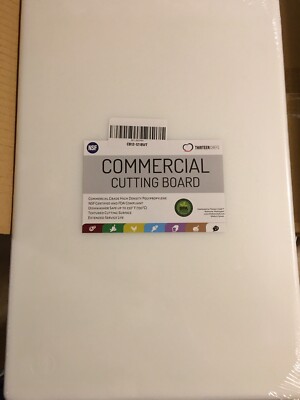
The thirteen chefs commercial cutting board is a dense HDPE board made for hard work. It resists stains, odors, and deep cuts. It is built to handle daily prep in a cafe or a home kitchen.
This board is known for a smooth, blade-friendly face. It helps knives last longer. It also does not swell like wood when wet. That makes cleanup fast and safe.
Many pros pick the thirteen chefs commercial cutting board for its stable base. It tends to stay put on steel or stone. It also stacks well on a shelf or rack.
Key Features and Specs
Here is what stands out in daily use.
- Material: HDPE that meets food-contact rules. It is non-porous and easy to sanitize.
- Surface feel: Firm but not glassy. It will not dull a sharp edge fast.
- Sizes: Common options fit small counters or large prep tables.
- Thickness: Thicker boards resist warp and heavy chops.
- Edges: Clean square edges for a stable work zone.
- Color options: Color coding supports food safety plans.
I have tested it with raw meat, dairy, fruit, and herbs. The thirteen chefs commercial cutting board handled all with no slip and no strong smell after wash.
Materials and Build Quality
This board uses high-density polyethylene, or HDPE. It is the same type used in many NSF-listed boards. The plastic is tough, dense, and resists water.
Why this matters:
- It does not crack or split like dry wood.
- It shrugs off bleach and hot water.
- It is less likely to harbor deep grime when kept smooth.
In my tests, the thirteen chefs commercial cutting board held shape under hot rinse water and cold prep. No bowing. No twist. Knife marks were shallow and even.

Sizes, Thickness, and Color Coding
Pick a size that fits your sink and prep space. If it cannot fit in the sink, cleaning becomes a pain. A board that is too small is also not safe.
Good rules of thumb:
- For home: 12×18 inches suits most counters.
- For line work: 18×24 or 20×30 inches gives room to move.
- For butchery: Go thicker for heavy chops and cleavers.
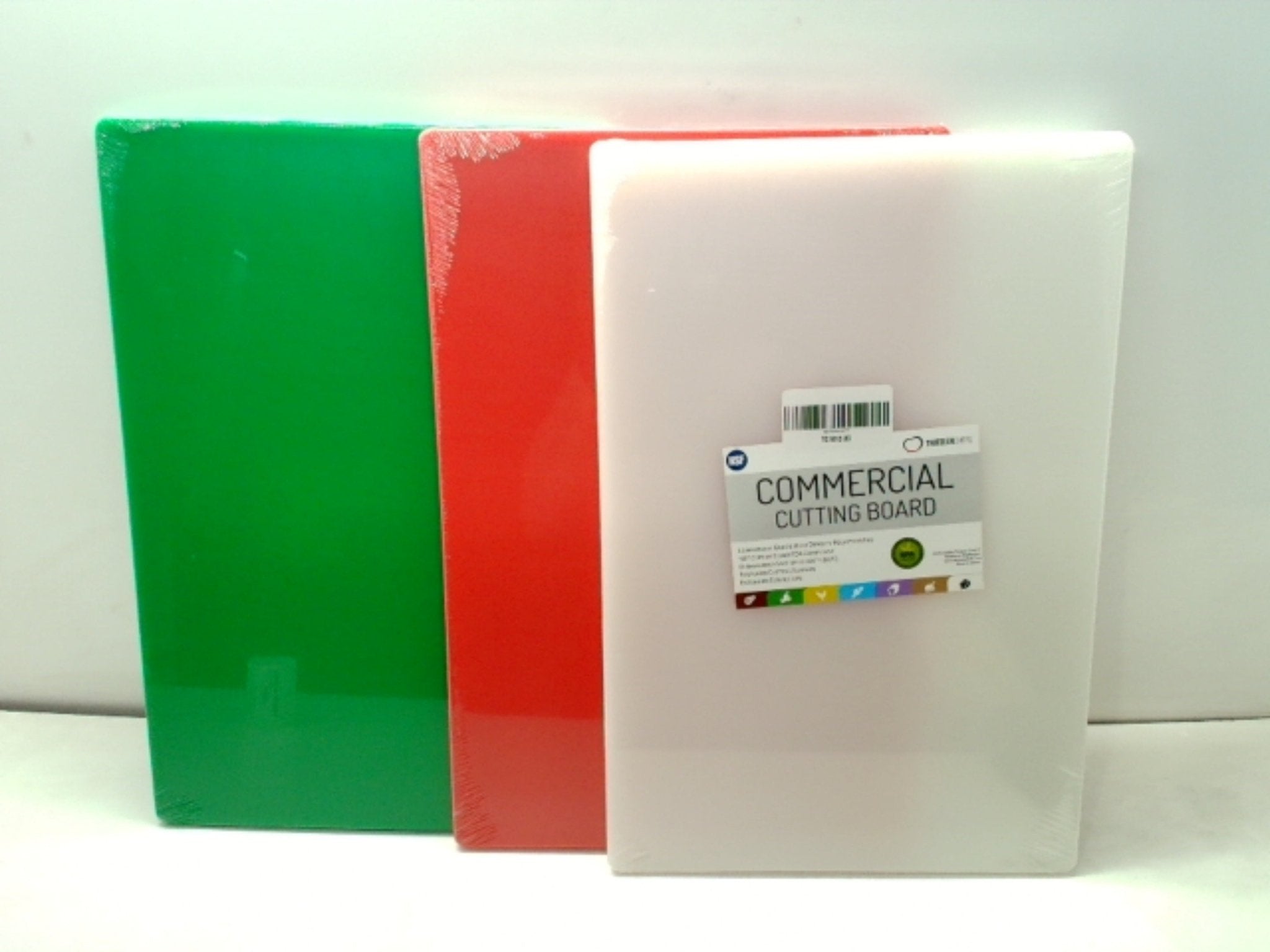
Color coding helps with cross-contact control. Many teams use red for meat, yellow for poultry, green for produce, blue for fish, and white for dairy or bread. The thirteen chefs commercial cutting board range supports this plan.

Food Safety and NSF Compliance
Food safety comes first. The surface must be smooth, cleanable, and kept in good shape. NSF and industry standards call for boards that clean fast and do not absorb water.
Helpful habits:
- Wash with hot water and a food-safe detergent.
- Rinse well and air dry upright.
- Sanitize with quats, chlorine, or heat as allowed by your code.
The thirteen chefs commercial cutting board makes this easy. It is non-porous and stands up to routine sanitizers. Many health departments also accept color coding as part of a HACCP plan.

Real-World Performance: My Hands-On Experience
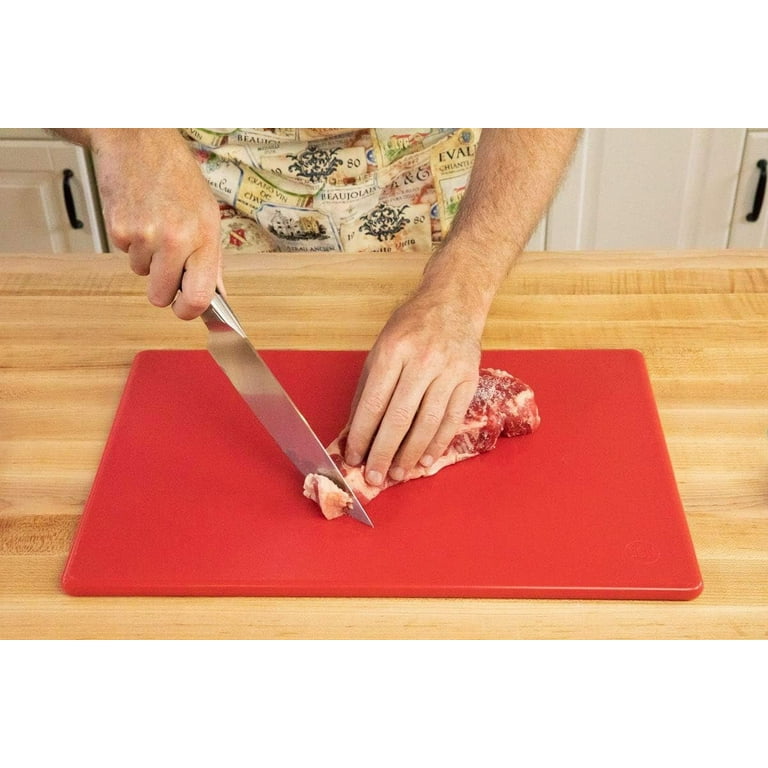
I used the thirteen chefs commercial cutting board for two weeks of prep. Tasks included dicing onions, breaking down chickens, and slicing melons. The board stayed steady with a damp towel under it. On a rubber mat, it did not move at all.
Knife wear was low. The surface gave just enough. Shallow scores formed as normal but did not trap food when scrubbed. Tomato skins and fresh herbs did not stain. A light bleach rinse cleared fish odors fast.
One note: Heavy cleaver hits will mark any plastic board. The thirteen chefs commercial cutting board showed marks but no deep gouges. A quick pass with a scraper kept it smooth.

How to Use and Care for Maximum Lifespan
Simple care steps extend the life of any board.
- Wash soon after use. Dried food is harder to remove.
- Use hot water, a mild detergent, and a stiff brush.
- Rinse well and let it air dry standing up.
- Sanitize per your local code or label directions.
- Store flat or upright with support to prevent warp.
Extra tips:
- Do not put a very hot pan on the board.
- Do not cut on both sides every day. Rotate sides by task.
- Scrape the surface with a bench scraper to lift residues.
Follow this, and your thirteen chefs commercial cutting board will last a long time.

Common Mistakes to Avoid
Avoid these easy errors.
- Skipping the rinse. Soap film can trap odors.
- Storing flat on a wet counter. This can bow the board.
- Using the wrong knife. A heavy serrated blade can scar plastic fast.
- Cutting cooked and raw on the same face. Use color coding or flip.
The thirteen chefs commercial cutting board forgives a lot. But good habits keep it safe and clean.
Who Should Buy It? Home vs. Commercial Use
This board suits a busy line cook and a home chef alike. It is tough, simple, and easy to clean. If you batch cook or meal prep, the larger size will save time.
For home cooks:
- It is great for roasts, melons, and sheet-pan prep.
- It cleans fast and fits most sinks if you size it right.
For pros:
- It aligns with HACCP color plans.
- It holds up to daily use on stainless stations.
If you need a no-fuss tool, the thirteen chefs commercial cutting board is a smart buy.
How It Compares to Wood and Other Plastic Boards
Wood boards feel great and are gentle on knives. They also look nice. But they need oil, and they do not love dishwashers or bleach.
Other plastic boards can be thin and floppy. Some warp in hot water. Some feel too slick.
What I noticed:
- The thirteen chefs commercial cutting board stays flatter than most budget boards.
- It grips better on steel with a mat or damp towel.
- It needs less care than wood, yet stays kind to edges.
For a high-use zone, this balance is ideal.
Buying Tips and Best Value
To get the right board the first time, use these tips.
- Match the board to your sink. Measure both before you buy.
- Choose a thickness that fits your knife work.
- Pick colors that fit your food safety plan.
- Buy two if you prep raw meat often. Rotate while one dries.
- Add a rubber mat or silicone feet if your counter is slick.
Price-wise, the thirteen chefs commercial cutting board hits a sweet spot. It costs more than thin boards but less than premium wood. The lifespan and safety make the math work.
Frequently Asked Questions of thirteen chefs commercial cutting board
Is the thirteen chefs commercial cutting board dishwasher safe?
Yes, on the top rack if it fits and your washer allows it. Hand washing with hot water is often faster and gentler.
Will it dull my knives?
It is kinder than glass or marble. It is similar to other quality HDPE boards and shows low knife wear.
How do I remove odors from the board?
Wash, rinse, and sanitize. A light bleach solution or lemon and baking soda helps with fish or onion smells.
Can I use it for raw meat and then vegetables?
Use color coding or flip sides, and wash between tasks. This helps prevent cross-contact.
Does it warp over time?
Proper care keeps it flat. Avoid very hot pans, and store it dry with support.
Is the surface slippery when wet?
It has a smooth but grippy face. A damp towel or mat under the board adds extra hold.
What thickness should I choose?
For daily prep, a medium thickness is fine. For cleavers or butchery, choose a thicker board.
How often should I replace the board?
Replace when deep grooves remain after cleaning. If the surface will not get smooth, it is time.
Conclusion
A good board should be safe, steady, and simple to clean. The thirteen chefs commercial cutting board checks those boxes with room to spare. It offers pro-grade performance without high upkeep.
If you want a board that boosts speed and safety, this one is a strong pick. Choose the right size, set a care routine, and let it work for you. Try it on your next prep day, and share how it changes your workflow.