The best wine opener for old corks is a two‑prong Ah‑So or a Durand.
If you love mature wine, you know the cork can be the hardest part. In this guide, I share what really works, why it works, and how to use a wine opener for old corks like a pro. You will learn my tested methods, tools I trust, and simple steps that save fragile corks and your night.
Why old corks fail and how design helps
Old corks dry out over time. They lose grip and turn soft or crumbly. Some shrink a bit and no longer seal well. When that happens, a standard worm can tear them apart.
A smart wine opener for old corks lowers stress on the cork. The goal is to reduce twist force and spread pressure. Tools that hold the cork from the sides or use a wide, sharp worm help a lot. That is why the right design matters more than brute force.
From years of service, I learned to scan the cork first. Look for stains, gaps, and dust. Rest the bottle flat for a minute, then stand it up. This keeps sediment calm and prepares the cork for a clean pull with a proper wine opener for old corks.

Types of wine opener for old corks
A wine opener for old corks comes in a few proven styles. Each has a best use case. Below are the ones I reach for first, plus when to use them.
Two‑prong extractor (Ah‑So)
- Best for dry or brittle corks. It hugs the cork from both sides.
- Slide the long prong, then the short one. Rock and pull gently.
- Pros: Minimal cork damage, excellent on fragile corks.
- Cons: Needs a steady hand and patience.
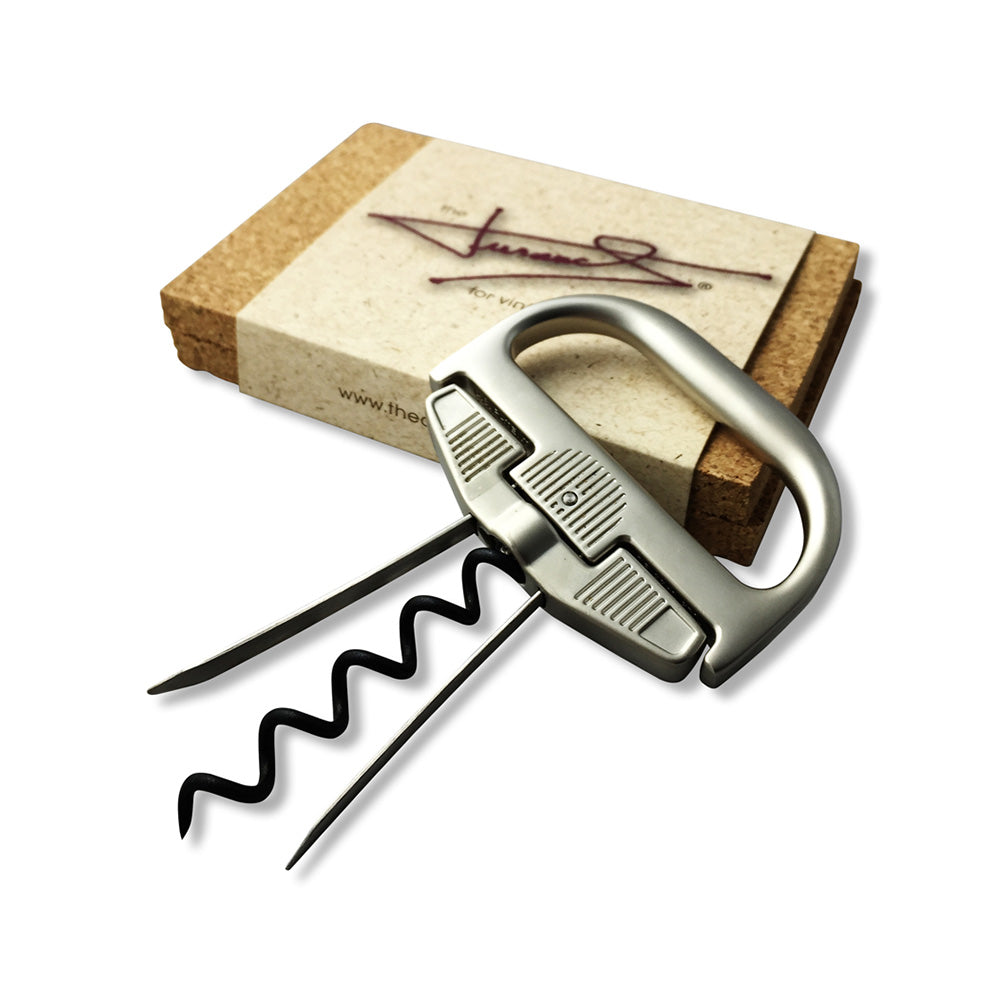
Dual‑system extractor (Durand‑style)
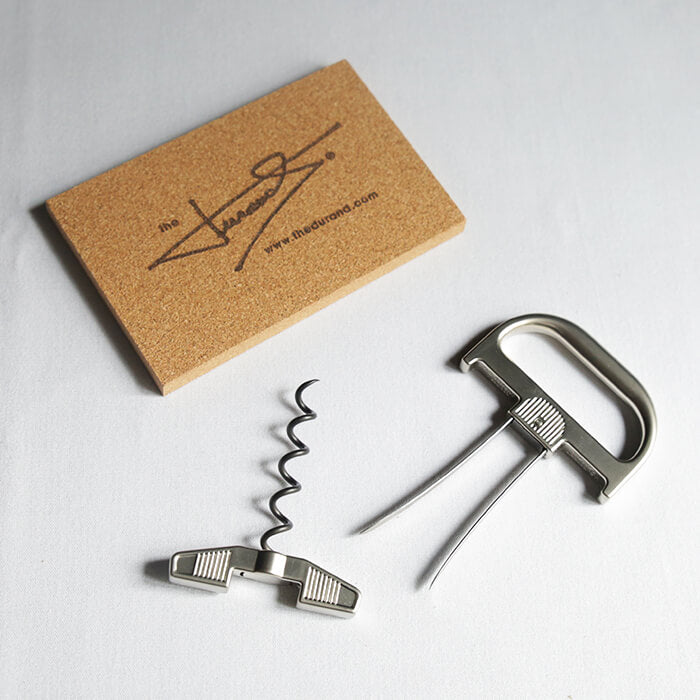
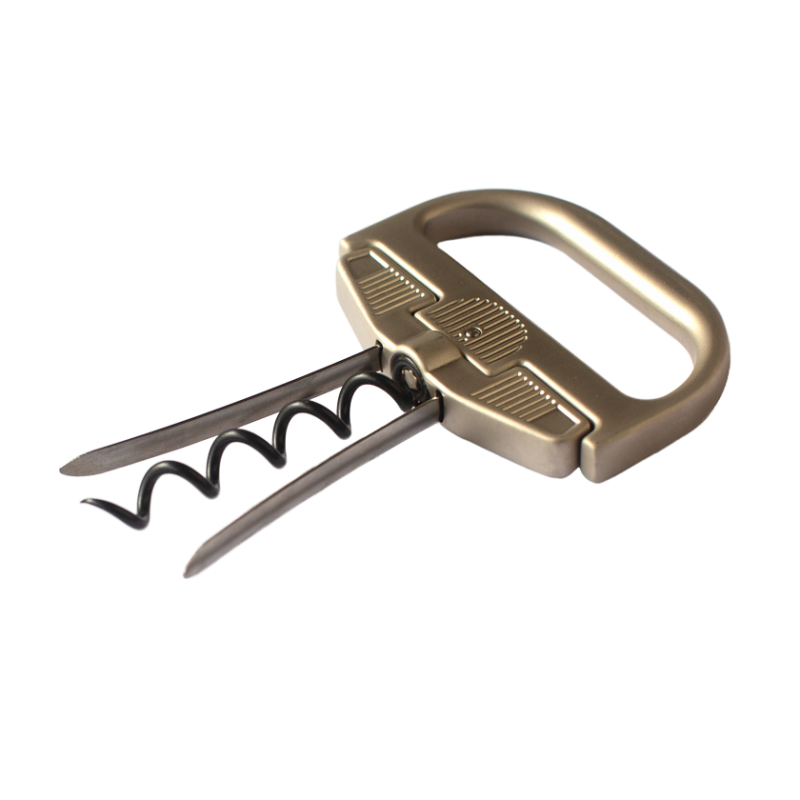
- Combines a worm and two prongs. Great for very old corks.
- The worm stabilizes the core while prongs hold the sides.
- Pros: Very high success rate on mature bottles.
- Cons: Higher price and a bit slower to learn.
Waiter’s corkscrew with a wide, sharp worm
- Choose a long, wide‑gauge worm with a smooth finish.
- Enter dead center and stop before breaking through the bottom.
- Pros: Compact, familiar, good for medium‑old corks.
- Cons: Can shred very soft corks if you rush.
Lever corkscrews
- Offer strong leverage with little effort.
- Use only with a wide worm and careful control.
- Pros: Fast and easy on mid‑age corks in good shape.
- Cons: Can crush weak corks if the worm is too thin or dull.
Cork retrievers and spiral hooks
- Designed to pull out broken pieces.
- Slide beside the fragment and pull straight up.
- Pros: Saves a bottle after a failed first try.
- Cons: Not a first choice for intact old corks.
My rule of thumb is simple. If the cork looks fragile, reach for a two‑prong wine opener for old corks first. If it is very old or already cracked, a Durand‑style tool is worth its weight in gold.
Step‑by‑step methods for fragile corks
Use a calm pace and light hands. These steps work with any good wine opener for old corks. Choose the method that matches the cork’s condition.
Method A: Two‑prong extractor (Ah‑So)
- Cut and clean. Remove foil and wipe the top and neck.
- Insert long prong first. Press along the glass, not the cork.
- Work in the short prong. Rock side to side with tiny moves.
- Seat the tool deep. Twist gently while pulling up.
- Finish slow. Keep the bottle steady to avoid sediment shift.
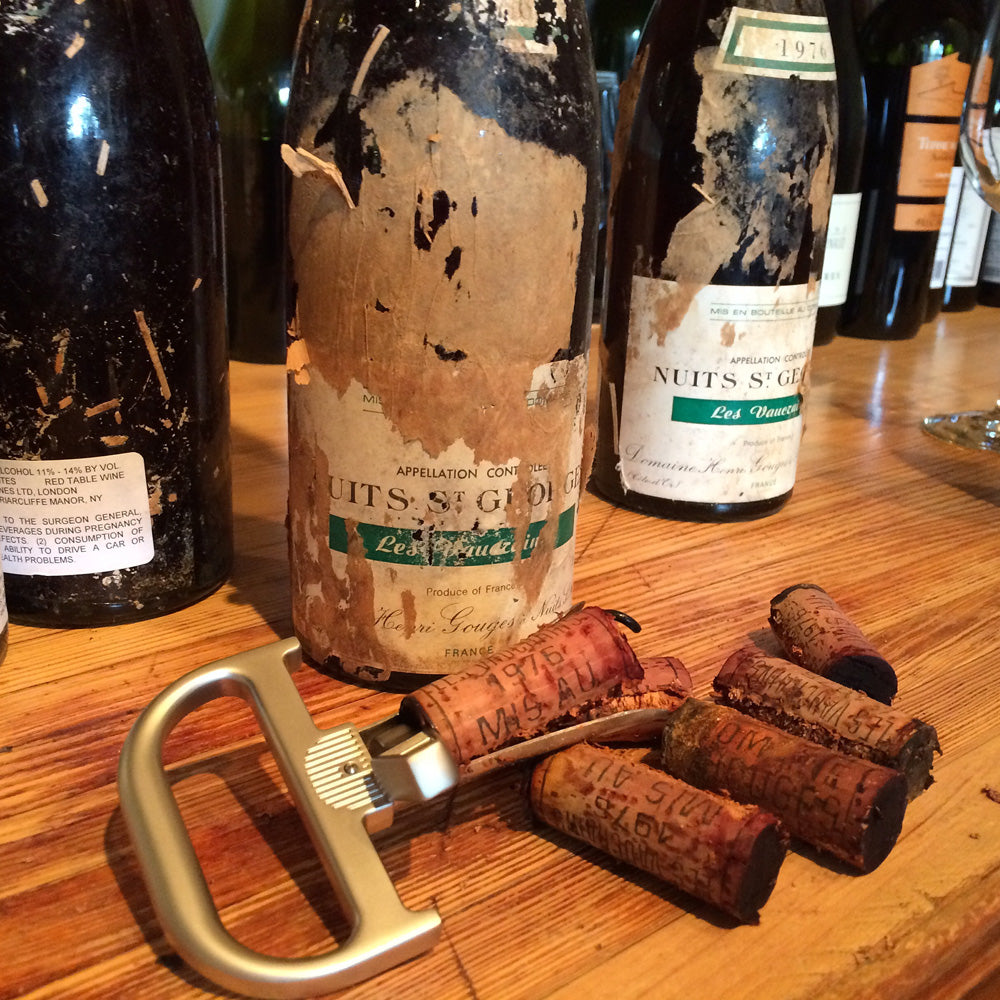
Method B: Dual‑system extractor (Durand‑style)
- Center the worm. Turn until just before the tip breaks through.
- Add prongs. Slide them down the sides, rocking a little.
- Pull with both parts. Gentle twist, slow lift, steady pressure.
- Remove as one. Keep the cork straight until clear.
Method C: Wide‑worm waiter’s corkscrew
- Prime the cork. If very dry, warm the neck with your hand for 30 seconds.
- Center the worm. Turn slow with even depth.
- Use a two‑step lever. Lift in stages to reduce stress.
- Stop early if it crumbles. Switch to prongs or a retriever.
Pro tip from service: pause if you feel gritty resistance. That often means the worm hit a fragile pocket. Easing off for three seconds lets the cork relax. Then you can continue and save the day. A careful hand beats strength when using any wine opener for old corks.
Buying guide: choose the best wine opener for old corks
Look for build, fit, and control. A small upgrade in quality makes a big difference with mature bottles.
- Prong thickness and flex: Choose thin yet firm stainless prongs that slide with little friction.
- Worm gauge and length: Go for a wide, polished worm at least 1.75 inches long. It grips without shredding.
- Handle comfort: A broad, non‑slip handle gives control with less force.
- Materials: Hardened steel or similar alloys last longer and stay sharp.
- Case and sheath: Protect prongs and worm tips, so they do not dull in a drawer.
- Price and value: A good two‑prong is affordable and lasts years. A Durand‑style tool costs more but shines on very old corks.
- Versatility: If you open both young and old wine, own a waiter’s corkscrew plus a two‑prong wine opener for old corks.
I learned the hard way that a thin, rough worm ruins soft corks. After I switched to a wide, polished screw and a two‑prong backup, my success rate with vintage bottles soared. If you buy one tool, get a solid two‑prong wine opener for old corks. If you buy two, add the dual‑system extractor.
Care, storage, and rescue tips
Small habits protect both tool and cork. They also keep sediment where it belongs.
- Store the bottle on its side until service, then stand it up for at least 30 minutes.
- Clean the lip and top of the cork before you insert any tool.
- Wipe prongs and worm with a dry cloth after use. Keep them sharp and smooth.
- If the cork cracks mid‑pull, stop. Insert prongs and lift the rest out.
- If cork crumbs fall in, pour through a fine mesh or a paper coffee filter.
- If the cork is fused, apply a few drops of clean, neutral spirit on the top. Wait 20 seconds, then try again.
A gentle mindset helps. Think of the cork like old lace. Your wine opener for old corks should support, not stab. Work slow, and you win most battles.

Common mistakes to avoid
Avoid these errors when you pick or use a wine opener for old corks.
- Using a thin, dull worm. It drills and rips the cork.
- Rushing the pull. Speed adds torque and breaks soft edges.
- Twisting the bottle, not the tool. That stirs sediment into the wine.
- Piercing all the way through. It forces crumbs into the wine and can cause leaks.
- Skipping the two‑prong backup. It is the cheapest insurance you can buy.
Each mistake is easy to fix. Slow down, center the worm, and always have a two‑prong wine opener for old corks ready to go.

Frequently Asked Questions of wine opener for old corks
What is the safest wine opener for old corks?
A two‑prong extractor is the safest choice for fragile corks. It holds the cork from the sides and lowers the risk of crumbling.
Do I really need a Durand‑style tool?
Not always, but it helps on very old or weak corks. If you open many vintage bottles, it pays off fast.
Can I use a regular waiter’s corkscrew?
Yes, if it has a wide, sharp worm and you go slow. If the cork feels soft, switch to a two‑prong wine opener for old corks.
What if the cork breaks and falls in?
Do not panic. Decant through a fine mesh or coffee filter, then rinse the neck and pour.
Are air‑pump openers safe for old corks?
They can push air into the bottle and disturb sediment. For mature wine, use a two‑prong or a dual‑system wine opener for old corks.
How do I practice without ruining a good bottle?
Use a cheap bottle with a natural cork. Practice the prong slide and gentle pull until it feels smooth.
Conclusion
Old bottles are special, and their corks need care. With the right wine opener for old corks, a calm pace, and a clear plan, you can open vintage wine cleanly and enjoy every note.
Set yourself up with a solid two‑prong and a wide‑worm corkscrew, then master the steps in this guide. Try the methods tonight, share what worked for you, and subscribe for more simple, expert tips on caring for great wine.