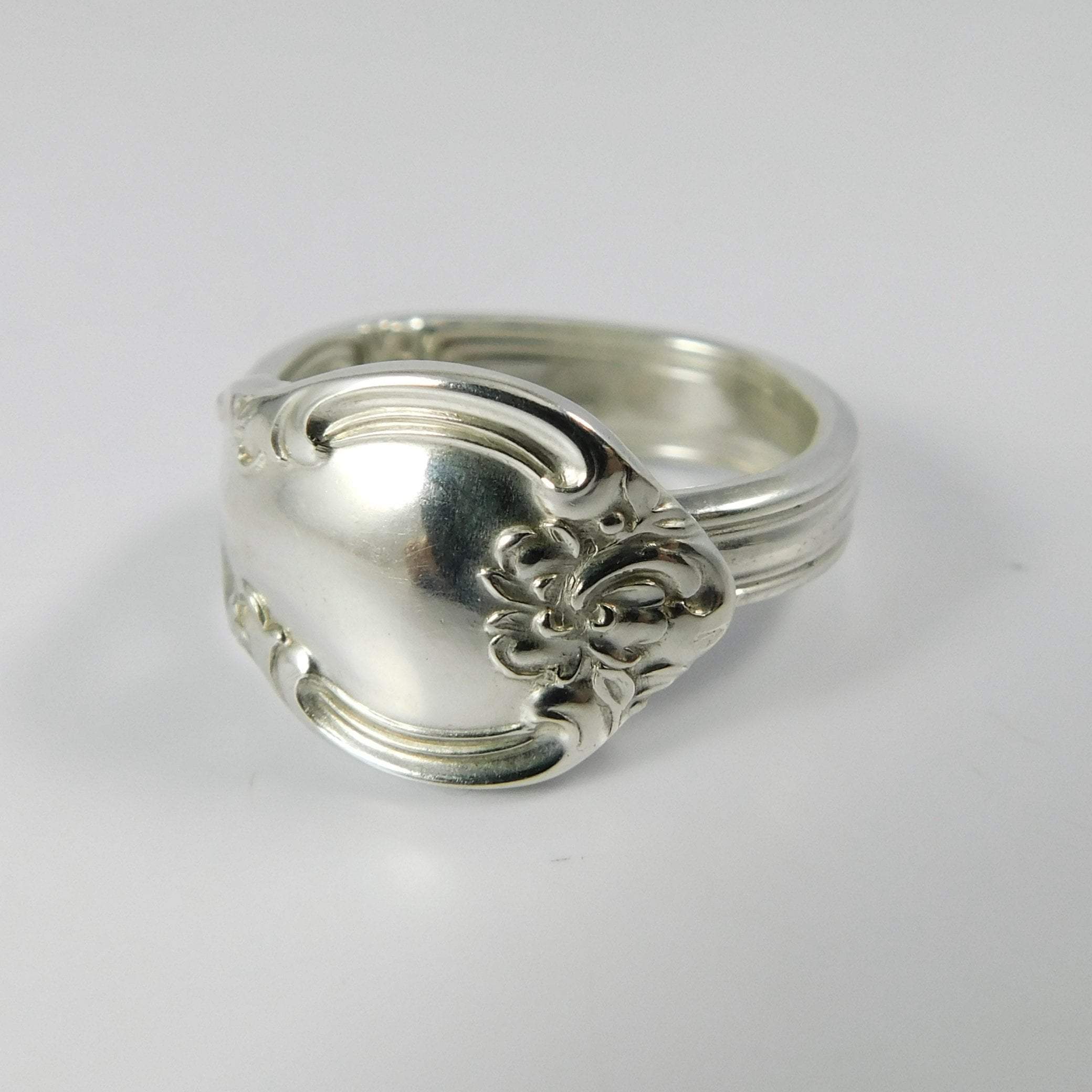
A vintage sterling silver spoon ring is a repurposed silver spoon shaped into jewelry.
I have worked with silver for years, and few pieces charm me like a vintage sterling silver spoon ring. This small band holds history, craft, and style in one. In this guide, I’ll show you how to spot the real thing, how to wear it well, and why this humble ring still feels special today. If you care about story and substance, a vintage sterling silver spoon ring belongs on your hand.
What is a vintage sterling silver spoon ring?
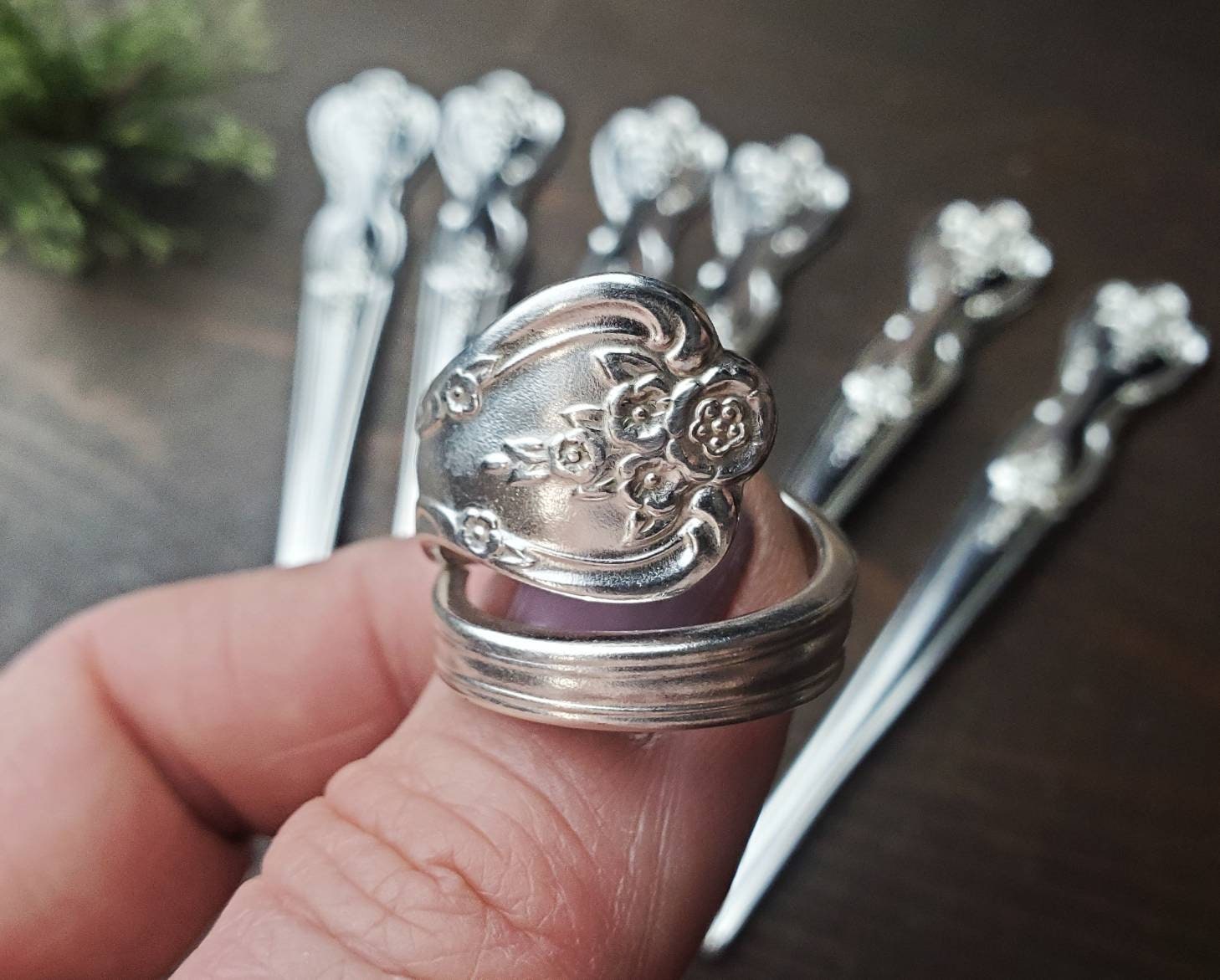
A vintage sterling silver spoon ring is a finger ring made from an old sterling spoon handle. The bowl is removed, and the handle is shaped into a band. You get a unique ring with the spoon’s original pattern and hallmarks.
Sterling silver is 92.5% silver and 7.5% copper or other metals. That blend gives the ring strength and shine. The result is a statement piece with roots in daily life and family tables.
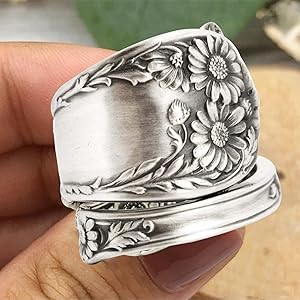
I love the feel of the raised scrolls and flowers on the finger. Many patterns date to the early 1900s. A vintage sterling silver spoon ring brings that era into your everyday style.
A short history with big heart
The spoon ring has folk roots. Stories say servants once bent stolen spoons into wedding bands. Historians debate this tale, but it shows how long spoons and love have linked.
Victorian and Edwardian flatware patterns were rich with detail. Makers like Gorham, Reed & Barton, and Wallace set the look. In the 1960s and 70s, artists revived the spoon ring as a symbol of craft and freedom.
Today, the vintage sterling silver spoon ring blends romance and reuse. It is jewelry with a past and a purpose. It is art you can wear every day.

How to identify a genuine sterling spoon ring
Look for clear marks. Sterling flatware often shows STERLING, 925, or maker’s marks. US marks can include Gorham’s lion-anchor-G, Reed & Barton’s script or shield, or Towle’s T. British sterling has the lion passant and an assay mark.
Watch for plated clues. EPNS, IS, or the word Plate means it is not sterling. Many pretty spoons are plated, but they will not wear as well as a vintage sterling silver spoon ring.
Use simple tests with care:
- Magnet test: Silver is not magnetic, but many fakes are not either. This test is a first step only.
- Weight and feel: Sterling feels dense and “warm.” Plated pieces can feel light or tinny.
- Acid test: Use a silver test kit on a discreet spot. If unsure, ask a jeweler.
Check the pattern and age. Real patina sits in low spots and looks soft and gray. Sharp, bright metal with dark grime in odd places can be a quick aging trick.
Styles and patterns to know
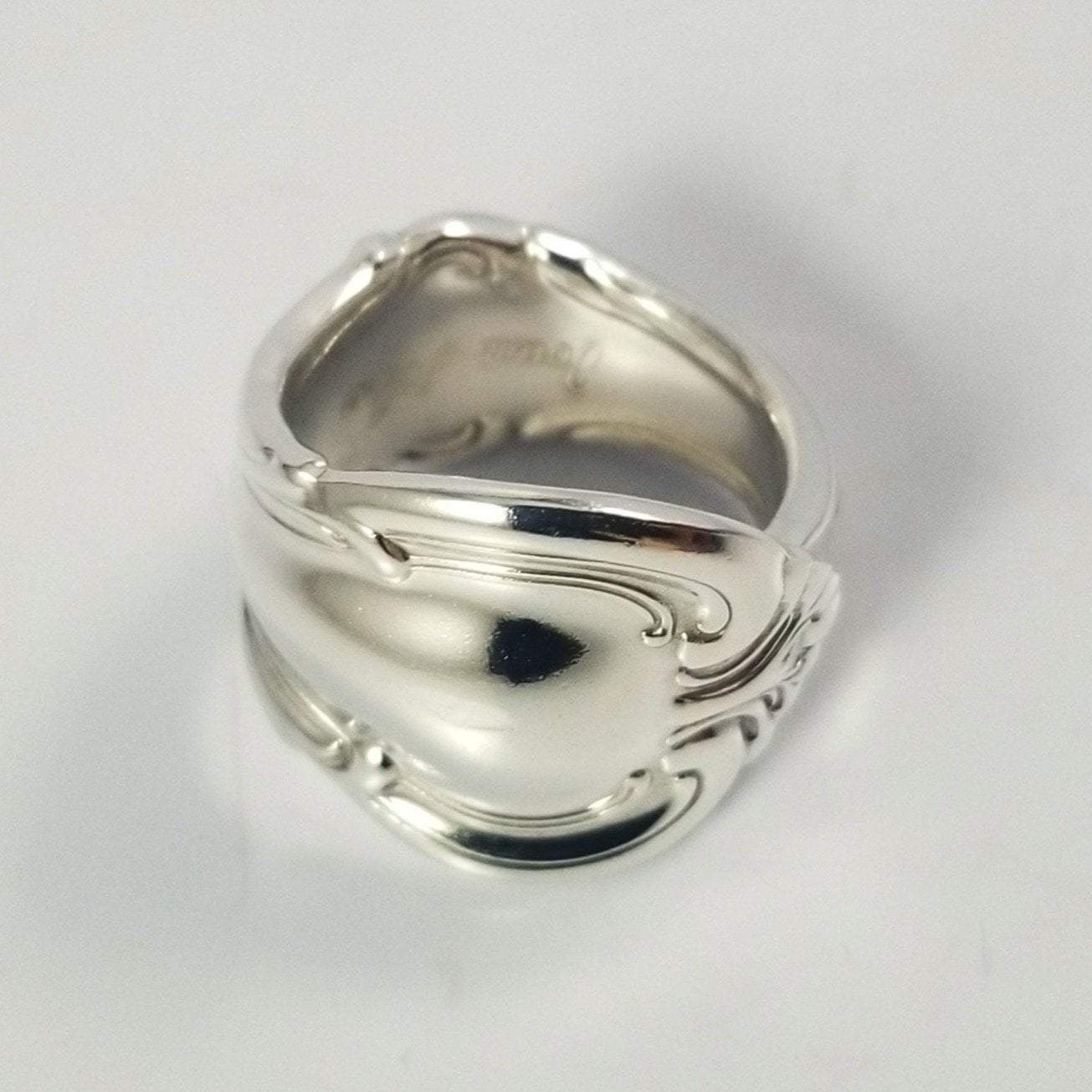
Patterns help tell a story. Some classic US designs include:
- Gorham Chantilly: Graceful scrolls with a refined look.
- Reed & Barton Francis I: Bold fruit and leaves, very detailed.
- Wallace Grande Baroque: Dramatic, ornate curves.
- Towle Old Colonial: Crisp edges, a traditional mood.
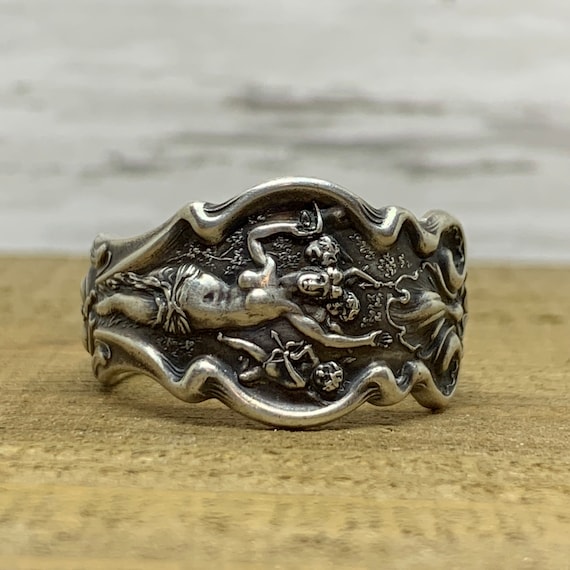
Art Nouveau spoons have flowing vines and flowers. Art Deco spoons have clean lines and geometry. Each style shapes the mood of a vintage sterling silver spoon ring.
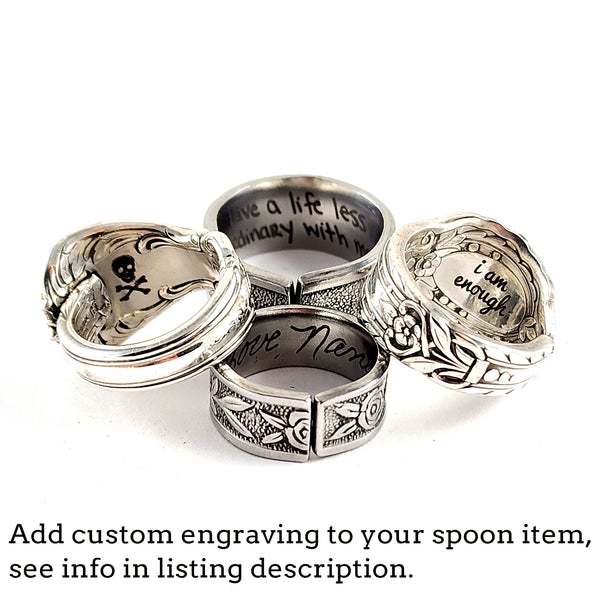
Note the placement of the pattern on the band. Some rings show the cartouche where a monogram once sat. Others highlight a floral tip. This choice changes the look and the value.
Sizing, fit, and daily comfort
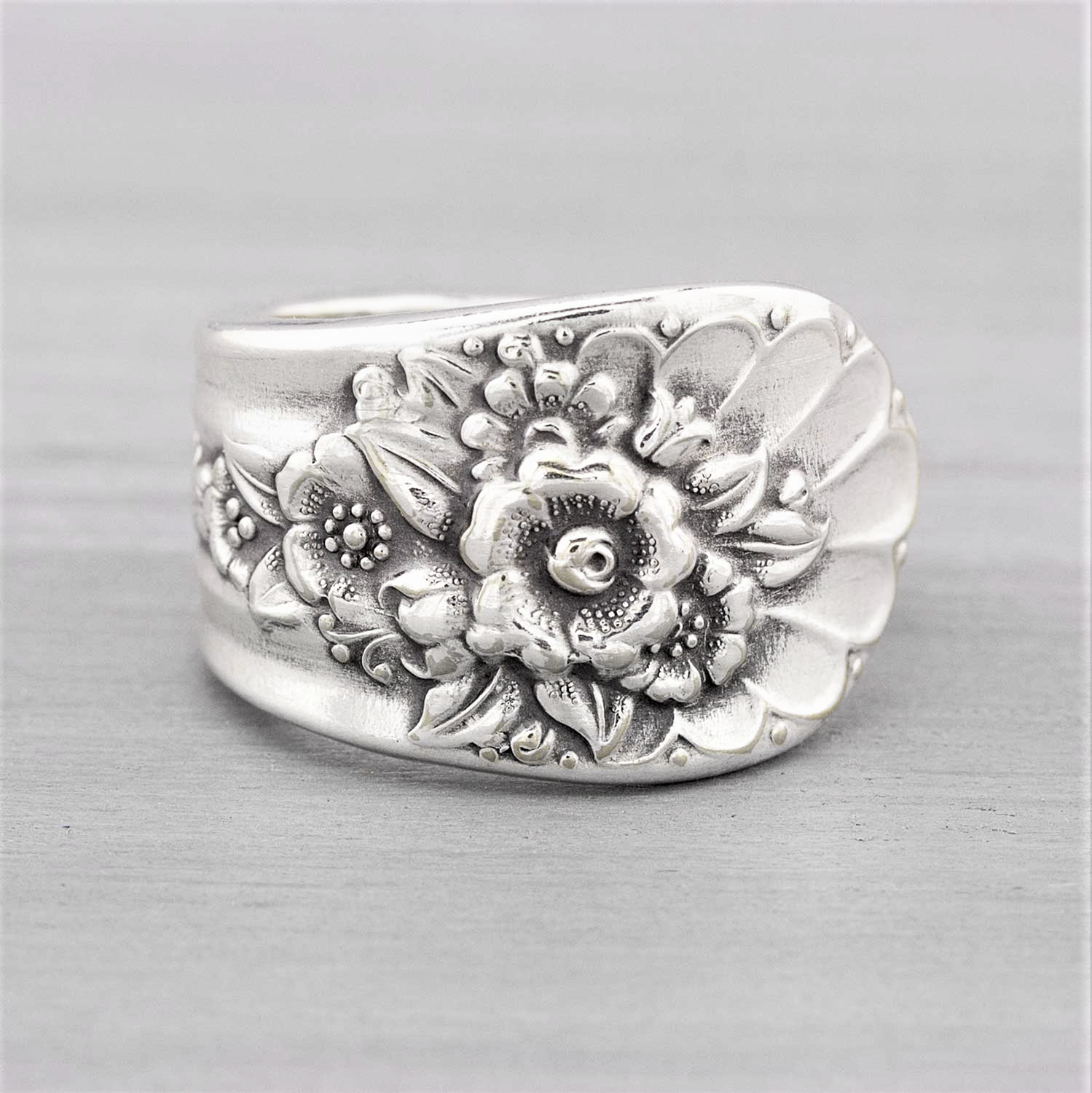
Most spoon rings can be sized within a small range. Sterling allows careful bending, but it also work-hardens. If a ring feels tight, do not force it. A jeweler can anneal and adjust it safely.
For comfort, check the band’s width. Wide bands may need a half-size up. Try it on at the end of the day when fingers are a bit larger.
I like a gentle oval fit for stability. A smooth inner edge helps with long wear. A well-made vintage sterling silver spoon ring should feel solid yet easy to wear.

Care, cleaning, and storage
Silver loves air and skin oils. Wear your ring often to slow tarnish. When you clean, keep it simple.
- Use warm water, a drop of mild soap, and a soft brush.
- Dry well and buff with a silver polishing cloth.
- Avoid bleach, toothpaste, baking soda pastes, and hard scrubs. They can scratch patterns.
- Store in a dry pouch with anti-tarnish strips.
Do not dip the ring in harsh silver dips. They strip patina and fine detail. A gentle hand keeps the character that makes a vintage sterling silver spoon ring shine.
How to style a vintage sterling silver spoon ring
This ring pairs well with many looks. With denim and a white tee, it adds soul. With a black dress, it adds texture and story.
Try stacking. Mix a vintage sterling silver spoon ring with thin bands for balance. Add a simple cuff or a chain bracelet for a clean set.
For impact, wear it on the index or thumb. Let the pattern face up on your hand. It becomes your talking point without even trying.
Value, pricing, and collecting smart
Most vintage spoon rings range from about $30 to $150. Rare patterns or known makers can fetch $200 to $500 or more. Size, condition, and pattern detail drive price.
Check for cracks, deep scratches, and poor solder. A sharp bend line can mean stress. Look for even curves and a snug joint.
If you collect, focus on patterns you love. Note maker marks and dates. Keep a simple log with photos and notes. Over time, your vintage sterling silver spoon ring collection will gain both value and meaning.
DIY: make a spoon ring the safe way
If you want to try making one, start with a spare sterling spoon. Avoid rare patterns. Keep the history intact when it matters.
Basic steps I use at the bench:
- Tools: Ring mandrel, rawhide mallet, butane torch, flush cutters, files, sandpaper, safety gear.
- Anneal the handle until it shows a dull red glow. Quench and dry.
- Cut the handle to length for your size. File edges smooth.
- Round on the mandrel in small steps. Re-anneal if it stiffens.
- Close the joint. If solder is needed, use silver solder and flux.
- Finish with fine papers and a light polish. Keep some patina in low spots.
Common mistakes to avoid:
- Using silverplate. The plating will flake and can stain skin.
- Skipping annealing. Metal work-hardens and can crack.
- Over-polishing. You can erase design lines and value.
A handmade vintage sterling silver spoon ring feels special. It carries both history and your craft.
Where to buy and what to ask
Good places include antique shops, estate sales, flea markets, and trusted online sellers. Look for clear photos of hallmarks and pattern tips. Ask direct questions.
Key questions to ask:
- Is it sterling or plated? Can you show the mark?
- What is the ring size and band width?
- Any repairs, cracks, or thinning?
- Which maker and pattern is it? Approximate year?
If you can, weigh the ring. Sterling has a satisfying heft. A careful buy keeps your vintage sterling silver spoon ring rotation strong.
Sustainability and ethics
A vintage sterling silver spoon ring is upcycled from existing metal. That means less new mining and less waste. You honor craft while keeping materials in use.
Sterling can be recycled forever with no loss of quality. Choosing vintage also supports small dealers and makers. It is style with values, worn right on your hand.
I like to think of it as circular fashion that never looks forced. It is simple, smart, and kind to the planet.
Common myths and mistakes to avoid
Myth: All spoon rings are antique. Fact: Many are modern creations from older or even new spoons. Check marks and workmanship.
Myth: Any heavy ring is sterling. Fact: Some base metals feel heavy, too. Marks and tests matter.
Mistakes I see often:
- Buying on photos alone without hallmark shots.
- Confusing IS or EPNS with sterling.
- Ignoring comfort. A pattern edge can dig into skin if not finished well.
Stay curious and ask for proof. Your next vintage sterling silver spoon ring will thank you.
Frequently Asked Questions of vintage sterling silver spoon ring
How can I tell if my spoon ring is real sterling?
Look for STERLING or 925 and a maker’s mark. If unsure, ask a jeweler for a quick acid test and weight check.
Will a vintage sterling silver spoon ring turn my finger green?
Sterling should not, but sweat and lotions can react with copper in the alloy. Keep it clean and dry, and it should be fine.
Can I resize a spoon ring at home?
Minor tweaks are possible, but metal can crack if work-hardened. A jeweler can anneal, adjust, and polish it safely.
Is silverplate safe to wear as a ring?
It is usually safe but not ideal. Plate can wear off, exposing base metal that may discolor skin or irritate it.
What makes some spoon rings more valuable?
Maker, pattern rarity, clear hallmarks, and strong detail raise value. Clean workmanship and good size also help.
Can I shower or swim with my spoon ring?
Short showers are fine, but avoid pools and hot tubs. Chlorine can damage silver and speed tarnish.
Are monograms a problem?
Not at all. Many collectors love old monograms. They add history and can increase charm and value.
Conclusion
A vintage sterling silver spoon ring blends story, craft, and style in a small, strong band. When you know how to spot real sterling, read patterns, and care for the finish, you get a ring that ages with you. It is timeless, personal, and kind to the planet.
Try one on this week. Ask the right questions, trust your eye, and choose a pattern that makes you smile. If you enjoyed this guide, share it with a friend, subscribe for more jewelry tips, or leave a comment with your favorite pattern.