Yes, food-grade silicone is safe in most air fryers when used right.
If you are curious about using silicone in air fryer, you are in the right place. I test air fryers and cookware for a living, and I use silicone liners, cups, and mats in my own kitchen every week. This guide breaks down what works, what fails, and how to get crisp food without a mess. You will learn when silicone helps, when it hurts, and how to choose safe products that last.

Why use silicone in an air fryer
Using silicone in air fryer can save time and cut stress. It keeps the basket clean. It stops sauces from welding to the grate. It also protects nonstick coatings and boosts the life of the basket.
From my tests, silicone shines with sticky foods. Think teriyaki wings, salmon with glaze, or cheesy bakes. Clean-up drops from scrubbing to a quick rinse. Using silicone in air fryer also reduces smoke, since fats do not drip onto hot elements as much.
There are trade-offs. Solid silicone blocks airflow. That can slow browning. Perforated silicone liners fix most of this. I reach for perforated liners 80% of the time. They balance airflow and easy clean-up.

Is silicone safe in air fryers
Food-grade silicone is stable at typical air fryer temps. Most makers rate it up to 428°F or 220°C. Many air fryer cooks sit at 350–400°F. That puts you inside the safe zone. Using silicone in air fryer is safe when you pick certified, food-grade items.
Look for LFGB or FDA compliance on the listing or box. Platinum-cured silicone has fewer odors and better heat stability than peroxide-cured parts. True silicone has no BPA and should not smell like plastic. If a new mat reeks, air it out. If odor stays after a deep wash and a 10-minute 350°F dry bake, return it.
Safety tips I use at home:
- Do not cover the entire basket with a solid mat. Use perforated silicone.
- Do not run broil or grill modes above 430–450°F with silicone inside.
- Never let silicone touch the heating element or open flame.
- Avoid preheating an empty air fryer with empty silicone inside. Add silicone with the food.
Using silicone in air fryer is safe when you follow those steps. It is simple and reliable.
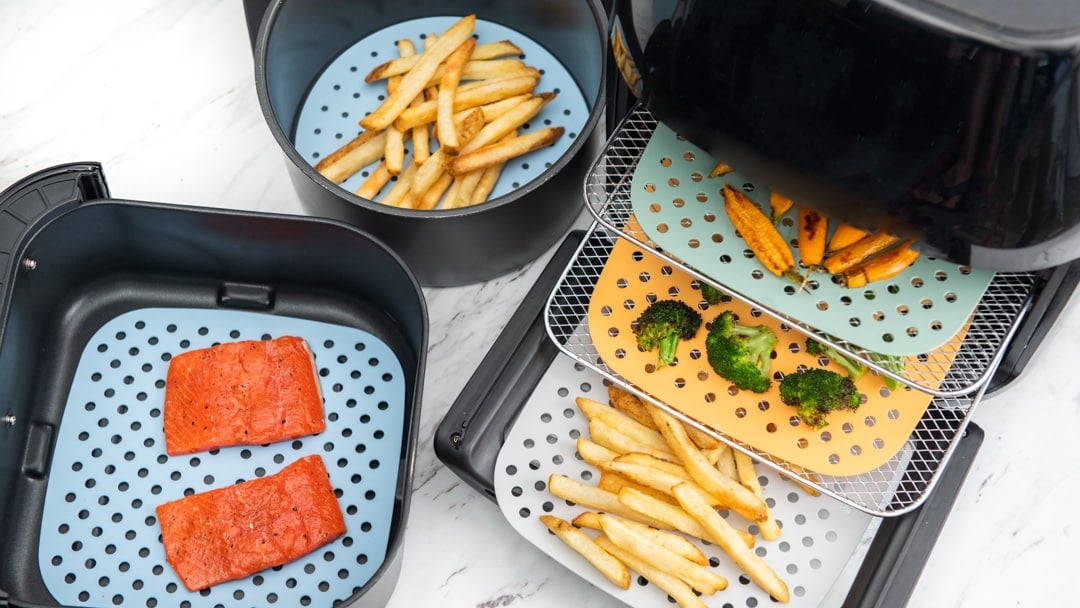
Types of silicone accessories and when to use each
Using silicone in air fryer is not one-size-fits-all. Each tool suits a job.
- Perforated silicone liners Best all-around for fries, nuggets, wings, and veggies. They keep airflow high and clean-up easy.
- Solid silicone baskets Good for saucy dishes, eggs, cakes, or brownies. Use when you want to hold liquids. Expect slower browning.
- Silicone cups and muffin molds Great for egg bites, mini meatloaves, lava cakes, and single-serve bakes.
- Silicone mats with ridges Useful for fish and bacon. Ridges lift food so fat drains while the mat protects the basket.
- Silicone trivets and pot holders Handy for lifting hot baskets and placing them on the counter without burns.
Pick the tool based on the food and your goal. For crisp edges, choose perforated liners. For batters and custards, use cups or a solid basket. Using silicone in air fryer works best when matched to the recipe.

How to use silicone in your air fryer step by step
Using silicone in air fryer is easy if you follow a simple flow.
- Check your manual Confirm silicone is allowed. Most brands allow safe, oven-rated silicone.
- Preheat smart Preheat the empty basket if your recipe needs it. Then add the silicone liner with the food. This avoids overheating empty silicone.
- Fit matters Choose a liner that fits flat. Do not curl the edges up into the fan.
- Keep airflow Use perforated silicone for most crisp foods. Leave space around the edges when you can.
- Add a light mist of oil For extra crunch, spray the top of the food, not the liner.
- Adjust time Add 2–5 minutes when using thick or solid silicone. Check early the first time you try a new setup.
- Do not overload One even layer cooks best. Shake or flip halfway through.
With these steps, using silicone in air fryer delivers clean baskets and tasty results.

Cleaning, care, and how to make silicone last
Good care keeps silicone safe and fresh. After a cook, let it cool a bit. Wipe grease while it is still warm. Then wash with hot water and soap.
For stains and smells, I use this routine:
- Soak in hot water with a spoon of baking soda for 20 minutes.
- Scrub with a soft brush. Avoid steel pads.
- For deep odors, bake empty at 350°F for 10 minutes. Let it air out.
Silicone can go in the top rack of a dishwasher. Store it flat to avoid kinks. Inspect for cracks or peeling. If you see rough or chalky spots, replace it. Using silicone in air fryer works best with clean, intact pieces.
Common mistakes and myths
I see the same errors again and again. Here is how to avoid them.
Mistakes to avoid:
- Blocking airflow with a solid mat under fries or wings. Use perforations.
- Preheating with empty silicone inside. Add it with food to protect the material.
- Overfilling cups or baskets. Food steams instead of crisps.
- Buying low-grade, smelly silicone. Choose certified, food-grade parts.
Myths to ignore:
- Silicone releases toxins at normal air fryer temps False. Food-grade silicone is stable up to about 428°F.
- Silicone is the same as rubber False. Silicone is a heat-stable elastomer, not latex or natural rubber.
- You cannot get crisp food on silicone False. Use perforated liners, space food, and add a light oil mist.
When using silicone in air fryer, small tweaks fix most problems.

Real-world tests and when silicone shines
Here is what has worked in my kitchen.
- Teriyaki wings Perforated liner. Less smoke and sugar does not burn onto the basket. Same cook time, better clean-up.
- Salmon with glaze Perforated liner or ridged mat. Skin stays intact. Add 2 minutes for thicker fillets.
- Bacon Ridged mat. Fat drains into grooves. Crisp edges without a greasy basket.
- Cookies and brownies Solid silicone pan. Even bake. Add 3–5 minutes to standard times.
- Egg bites Silicone cups. No sticking. Pop right out with a gentle push.
Using silicone in air fryer helped me cook sticky and delicate foods with zero stress. It also kept my basket looking new.
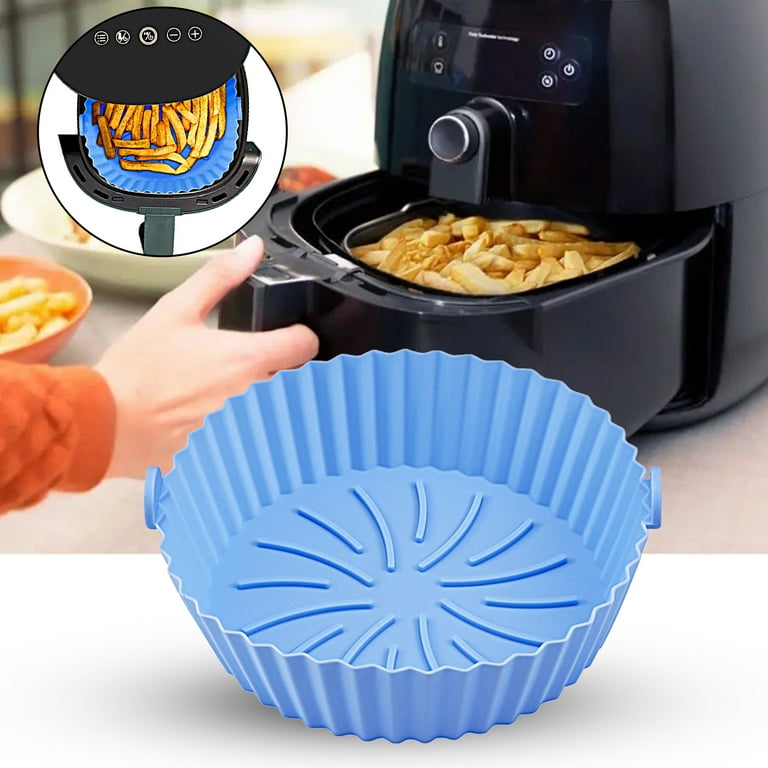
Buying guide what to look for
Choose well and you only buy once. I use these checks before I click Buy.
- Food-grade, LFGB or FDA compliant This matters more than price.
- Temperature rating Up to 428°F or higher.
- Perforations For crispy foods. Look for many small holes, not a few big ones.
- Thickness About 2–3 mm holds shape but still lets heat through.
- Exact fit Match your air fryer size and shape.
- Easy-grab tabs Tabs help you lift liners without tearing.
- Low odor New silicone should not smell strong out of the box.
- Clear labeling Brands that share test results earn trust.
These points make using silicone in air fryer safe, clean, and predictable.

Quick reference time and temperature tweaks
You may need small changes when using silicone in air fryer. Use these as a start and adjust for your unit.
- Frozen fries Perforated liner. Add 2–3 minutes to your usual time.
- Breaded chicken bites Perforated liner. Same temp. Add 2 minutes if crowded.
- Skin-on salmon Ridged mat. Same temp. Add 2 minutes for 1-inch fillets.
- Brownies in silicone pan Reduce temp by 10–15°F. Add 3–5 minutes.
- Egg bites in cups Same temp. Check 2 minutes early to avoid overcooking.
Always check doneness with a food thermometer for meats. Aim for safe internal temps. Using silicone in air fryer should not replace good safety checks.
Frequently Asked Questions of using silicone in air fryer
Can I put any silicone in an air fryer
No. Use food-grade silicone rated to at least 428°F. Avoid items with fillers, strong odors, or no safety labeling.
Do silicone liners affect crispiness
Yes, if they are solid. Perforated silicone liners keep airflow high and produce crisp results close to bare baskets.
Is parchment better than silicone
Different tools for different jobs. Parchment is great for ultra-crisp fries, while silicone is reusable and better for sticky or saucy foods.
Can silicone touch the air fryer’s heating element
No. Keep silicone away from direct heat and open flame. Place it flat in the basket, not near the top element.
Should I preheat with silicone inside
It is safer to add silicone with the food. This avoids overheating empty silicone and protects its long-term durability.
How do I remove silicone odors
Wash with hot, soapy water, then soak with baking soda. If needed, dry-bake at 350°F for 10 minutes and air it out.
Will silicone release chemicals at high heat
Food-grade silicone is stable at air fryer temps. Stay within the rated limit and avoid broil modes above 430–450°F.
Conclusion
Using silicone in air fryer can save you time, protect your basket, and make sticky dishes easy. Choose food-grade parts, keep airflow with perforated liners, and make small time tweaks. You will get crisp food and quick clean-up.
Try one meal this week with a perforated liner, like glazed wings or salmon. See how simple it feels. If this guide helped, share it with a friend, subscribe for more kitchen tips, or leave a comment with your best silicone win.