A wooden serving tray with handles offers secure grip, warm style, and easy serving.
If you love simple hosting wins, this piece is gold. A wooden serving tray with handles blends form and function in a way that feels timeless and easy to use. I’ve styled dozens in homes, cafes, and photo shoots, and the right tray can transform breakfast in bed, organize a coffee table, or carry snacks with zero spills. In this guide, you’ll learn how to pick, use, style, clean, and care for a wooden serving tray with handles with confidence and care.
What Is a Wooden Serving Tray with Handles?
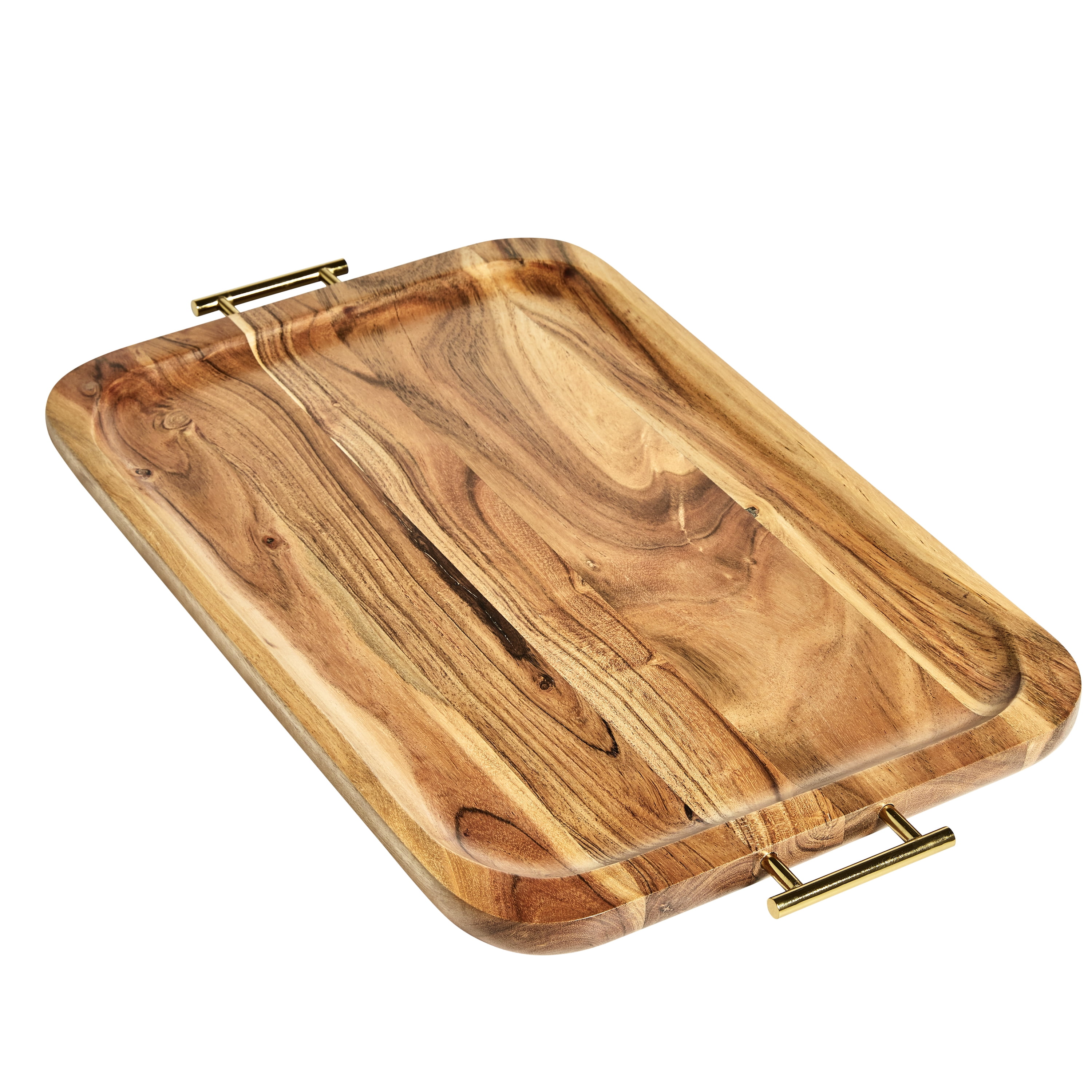
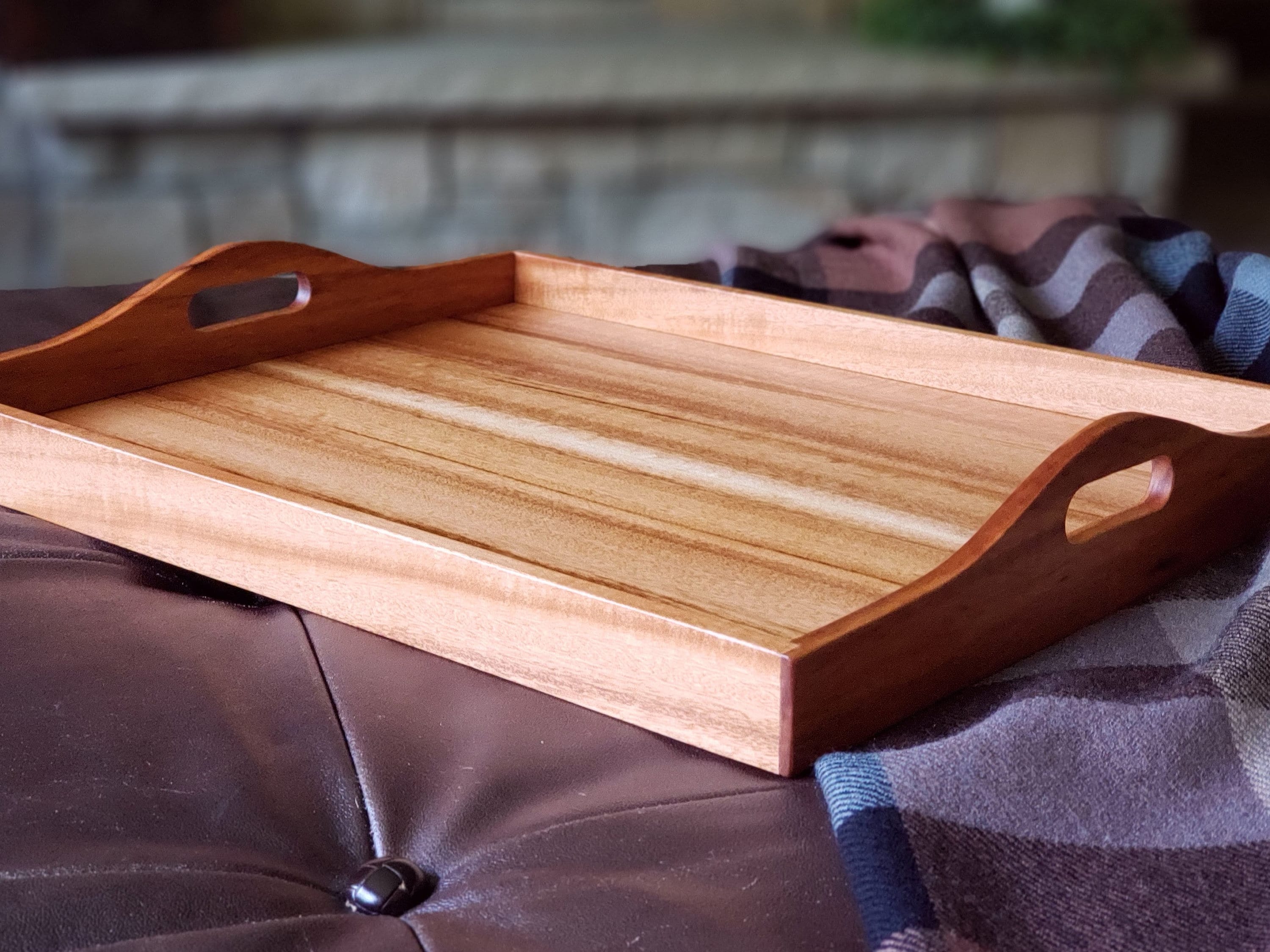
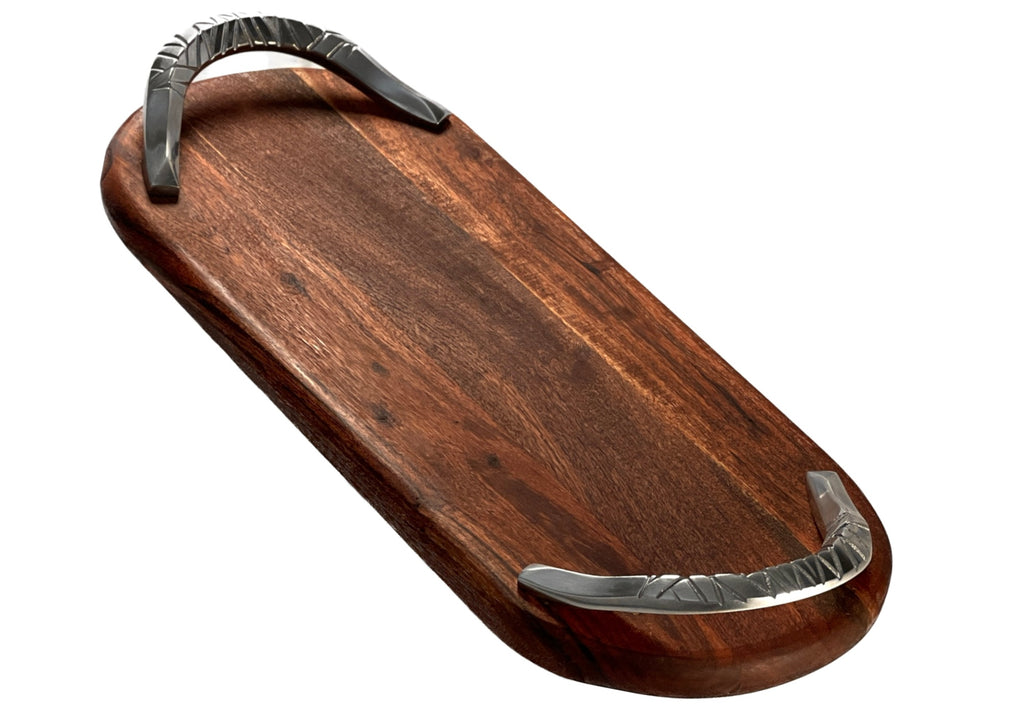
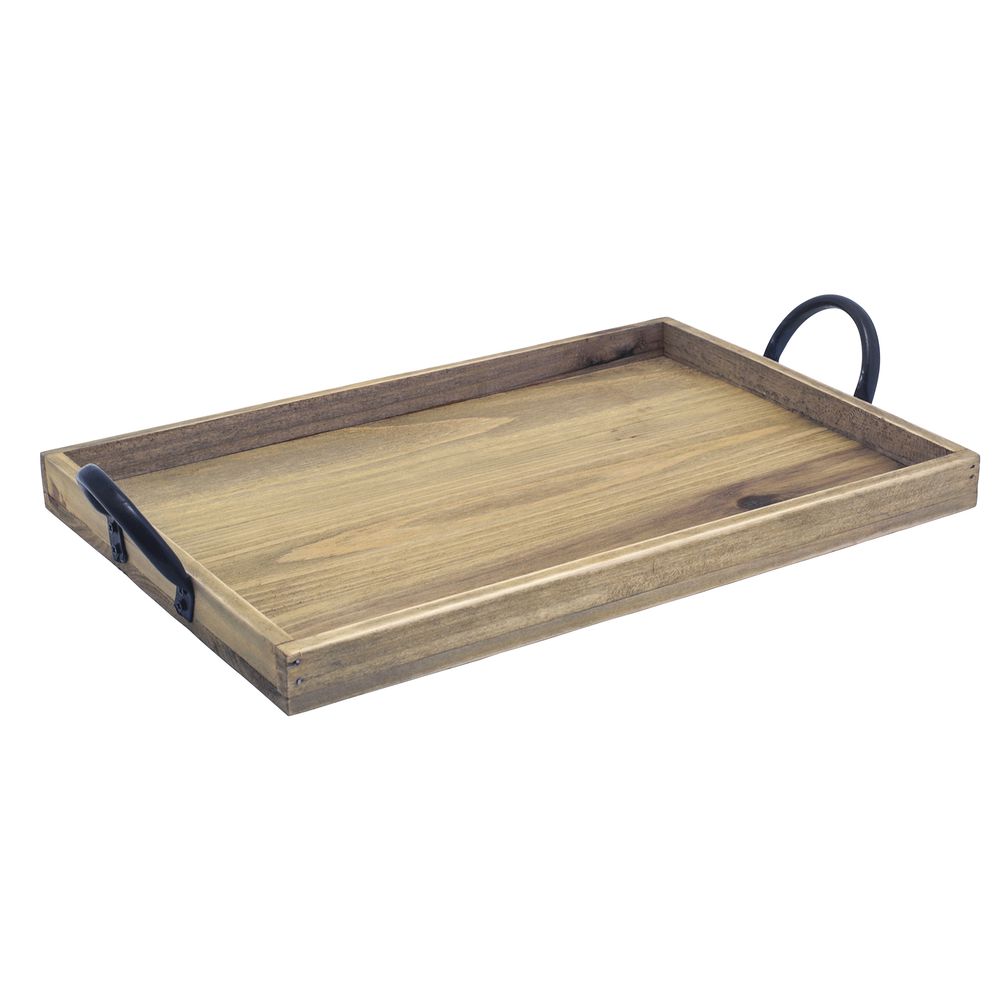
A wooden serving tray with handles is a flat board with side walls or edges and built-in grips for safe carrying. The handles keep your hands steady, and the wood gives warmth and character that metal or plastic can’t match. Some trays have cut-out handles, while others use metal or leather pulls. The result is a sturdy, good-looking helper for kitchens, living rooms, patios, and picnics.
You’ll see these trays in many sizes, from compact 12-inch versions to large 24-inch ottoman trays. Most work for drinks, snacks, charcuterie, mail sorting, and decor. If you want a useful, stylish upgrade that you will reach for daily, a wooden serving tray with handles is hard to beat.
Key Benefits and Everyday Uses
A wooden serving tray with handles solves small but real problems at home. It makes carrying items safe, keeps surfaces neat, and doubles as decor. It also feels warm and natural in any room.
Great uses include:
- Breakfast in bed without spills and crumbs on sheets
- Coffee station setup with mugs, sugar, and spoons in one place
- Charcuterie and cheese boards that look photo-ready
- Entryway catchall for keys, mail, and sunglasses
- Ottoman organization with a solid base for drinks and remotes
- Patio snack runs with steady handles in one trip
From my own kitchen, I use one to shuttle hot cocoa and cookies on movie nights. It keeps the carpet clean and saves trips. A wooden serving tray with handles turns chores into small rituals.
Materials and Wood Types Explained
Wood choice changes how your tray looks, feels, and wears. Let’s break down common options so you can pick the right wooden serving tray with handles.
Popular woods:
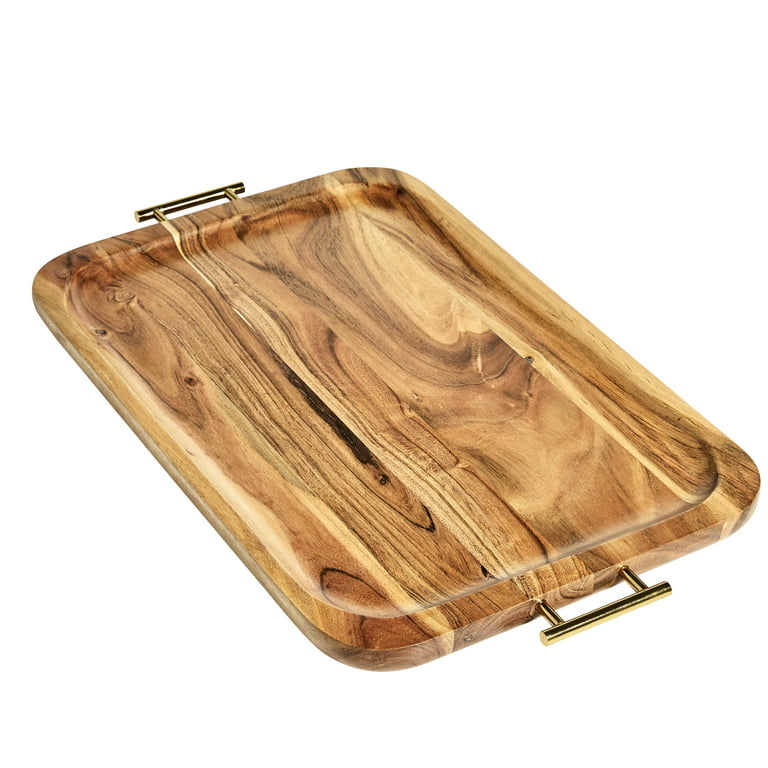
- Acacia: Rich color, striking grain, good hardness, budget friendly
- Maple: Light, clean look; very durable and food-safe when sealed
- Walnut: Deep brown tone; premium feel with elegant grain
- Oak: Visible grain, sturdy, classic farmhouse vibe
- Teak: Oily, water resistant; great for patios and humid spaces
- Bamboo: Technically a grass; renewable, light, and affordable
Construction matters, too. Solid wood feels premium and lasts long with care. Engineered wood or MDF with veneer is lighter and cheaper but may not love heavy loads or water. Food contact needs a proper, food-safe finish. If you plan to plate food right on the surface, aim for maple, walnut, or acacia with a certified food-safe oil or wax.
Design, Size, and Handle Ergonomics
Good design starts with safe, easy carrying. A wooden serving tray with handles should feel balanced when loaded.
Key points:
- Size: 16–20 inches suits most homes. Larger works for ottomans. Smaller fits tiny tables.
- Depth: Low sides keep items from sliding without trapping crumbs. About 1–2 inches is common.
- Weight: Aim for sturdy but liftable. Heavy wood plus metal hardware can add up fast.
- Handle clearance: You want room for fingers. About a 1-inch tall opening or more feels right.
- Grip: Rounded edges and sanded cutouts reduce hand strain and pressure points.
Tip from experience: If you carry wine glasses often, choose a tray with higher edges and wide handles. It helps keep stems stable. For charcuterie, a flat, board-like tray with subtle edges looks sleek and makes slicing easy.

Finishes, Care, and Long-Term Maintenance
Finish protects wood from stains and water. It also makes cleaning simple. A wooden serving tray with handles lasts years with the right finish and care routine.
Common finishes:
- Food-safe oil or wax: Natural look; needs re-oiling; great for food contact
- Polyurethane or varnish: Hard film; more water and stain resistant; wipe-clean
- Hardwax oil: Balanced option; durable with a soft, matte feel
Care basics:
- Wipe spills at once with a damp cloth, then dry
- Avoid soaking; never put in the dishwasher
- Re-oil food-contact trays every 1–3 months
- Use coasters under very hot mugs
- Store away from heaters and direct sun to prevent warping
If your tray looks dull, sand lightly with fine grit, then apply oil. Small scratches blend with a fresh coat. With this routine, your wooden serving tray with handles can age with style.
How to Choose the Right Wooden Serving Tray with Handles
Match the tray to how you live. Think about what you carry, where you use it, and how it should look.
Checklist:
- Purpose: Coffee table styling, food service, patio snacks, or bed trays
- Size: Measure your space and main plates or cups
- Weight: Test hold with one hand; add imagined load in your mind
- Handle style: Cutouts are sleek; metal or leather adds grip and flair
- Finish: Food-safe for direct serving; sealed for messy homes and kids
- Foot pads: Felt or silicone feet protect tables and reduce slip
- Clean lines vs. rustic: Pick a look that suits your room
When I help clients, we mock up a load: two mugs, a small plate, and a plant. If the wooden serving tray with handles feels stable in that scene, it’s a keeper.
Styling and Serving Ideas That Wow
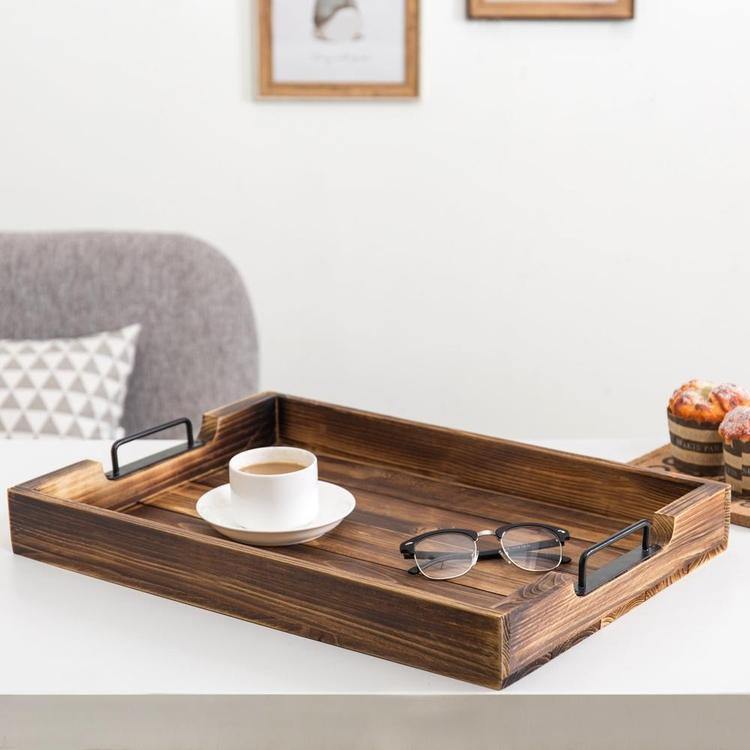
You can dress up a wooden serving tray with handles in minutes. Start with a theme, add layers, and play with height and texture.
Try these:
- Coffee station: French press, two mugs, sugar jar, tiny vase
- Charcuterie: 3 cheeses, 2 meats, nuts, fruit, and crackers tucked in bowls
- Spa vibe: Rolled towels, candle, small succulent, hand lotion
- Entry drop zone: Bowl for keys, mail stack, pen cup, tiny tray for coins
- Seasonal decor: Pinecones in fall, citrus and herbs in summer
Use odd numbers when styling. Three or five items feel balanced. Add a soft cloth or napkin for color and grip. A wooden serving tray with handles becomes your moveable stage.
Safety, Hygiene, and Sustainability
Safety comes first. Wood is safe when sealed and cleaned well. Keep raw meat off the tray, and line it with paper or a board if needed. Wipe, dry, and re-oil as needed. If you serve wet or oily foods, use small bowls to protect the surface.
On sustainability, choose responsibly sourced woods when possible. Bamboo regrows fast and is widely available. Long-lasting items are greener by nature. A wooden serving tray with handles that you use for years beats cheap, disposable options.
Extra tip: If anyone has nut allergies, wash well and avoid nut oils for conditioning. Food-safe mineral oil is a neutral choice for mixed households.

Price, Quality, and Where to Buy
You can find a wooden serving tray with handles at many price points. Price often reflects wood type, craftsmanship, and hardware quality.
General ranges:
- Budget: Basic bamboo or acacia, simple finish, under $30
- Mid-range: Solid hardwoods, nicer grain, better finish, $40–$90
- Premium: Walnut or teak, artisan joinery, metal or leather handles, $100+
Check for smooth sanding, tight joints, level base, and no wobble. Lift it. It should feel solid but manageable. Shop home stores, craft fairs, online marketplaces, or local woodworkers. I love buying from small makers. You get better wood selection and custom sizes that truly fit your space.
DIY and Customization Tips
Want a personal touch? Customizing a wooden serving tray with handles is very doable. You can buy an unfinished tray and finish it yourself.
Simple steps:
- Sand smooth with fine grit
- Wipe dust away with a damp cloth
- Apply food-safe oil or hardwax oil, let cure, and buff
- Add handles: leather straps, brass pulls, or knotted rope
- Stick on rubber feet to protect tables
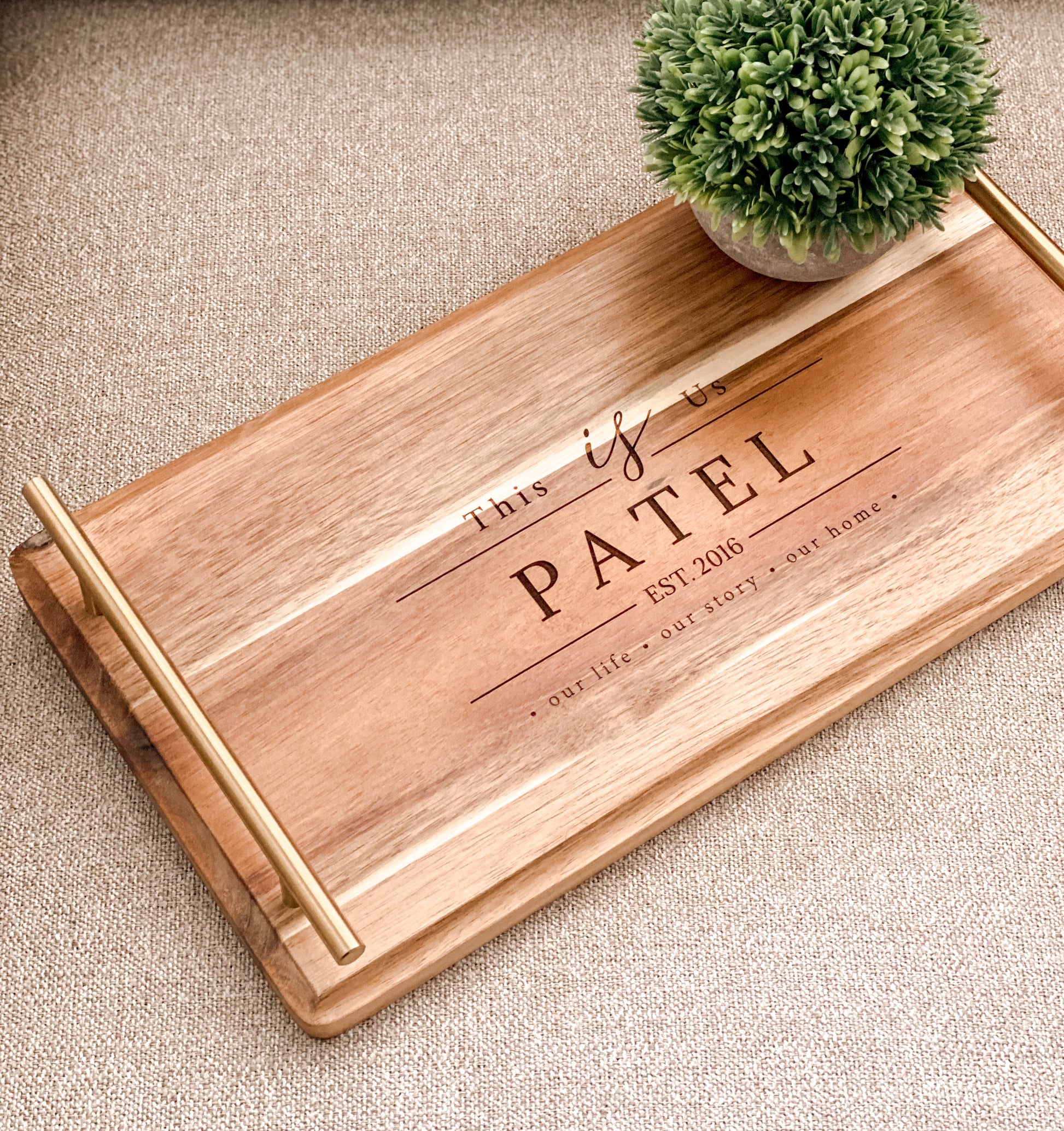
You can also burn a monogram or add a stencil with paint. Keep designs on the rim if you plan to cut or serve right on the surface. A DIY wooden serving tray with handles makes a great gift that feels thoughtful and lasting.
Frequently Asked Questions of wooden serving tray with handles
Is a wooden serving tray with handles safe for direct food contact?
Yes, if it has a food-safe finish like mineral oil or a certified hardwax oil. For messy or wet foods, use small bowls or parchment.
How do I clean a wooden serving tray with handles after spills?
Wipe with a damp cloth, then dry at once. Avoid soaking and never use a dishwasher.
What size wooden serving tray with handles should I buy for an ottoman?
Aim for a tray that covers about one-third to one-half of the ottoman. A 20–24 inch tray works for large ottomans.
Which wood is best for a long-lasting tray?
Hardwoods like maple, oak, or walnut resist dents and wear well. Teak and acacia are also strong and handle moisture better than many woods.
How often should I re-oil a wooden serving tray with handles?
Every 1–3 months for food-contact trays, or when the surface looks dry. High-use trays may need more frequent care.
Conclusion
A wooden serving tray with handles brings order, charm, and real utility to daily life. It carries coffee without drama, sets the stage for snacks, and anchors your decor in a simple, natural way. Choose the right size, finish it well, and give it quick care. You’ll have a piece that feels good in your hands and looks great in your home.
Ready to upgrade your space? Pick a style that fits your routine, try a simple styling idea today, and share how you use your wooden serving tray with handles. If you found this helpful, subscribe for more easy home tips and product guides.