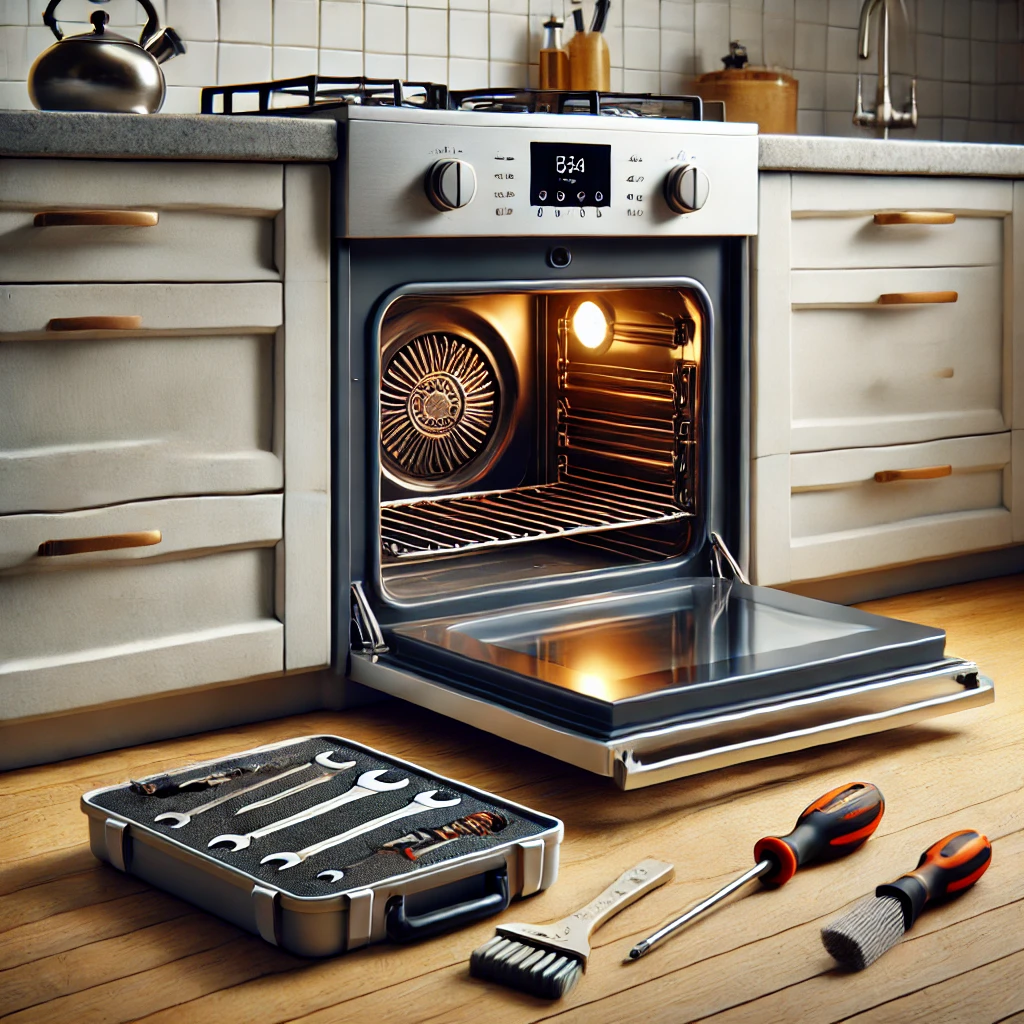
Most gas oven noises come from delayed ignition, airflow issues, loose parts, or worn fans.
If you have been asking why is my gas oven making noise, you are not alone. I’ve serviced and tested dozens of gas ovens in real kitchens, and I’ll show you what each sound means, what you can safely check, and when to call a pro. Stick with me and you’ll know the cause, the fix, and how to avoid the issue next time.
How a gas oven makes sound
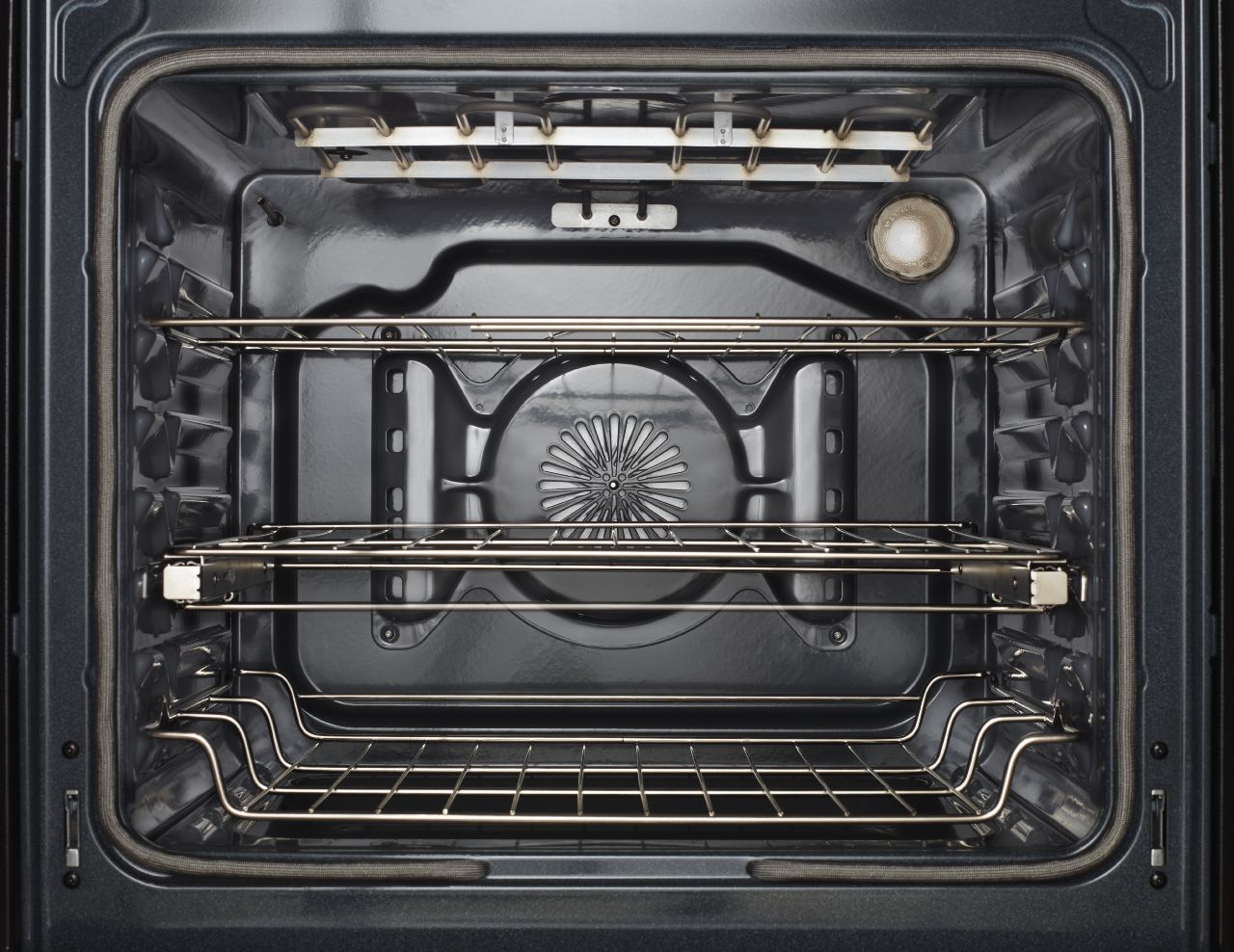
To answer why is my gas oven making noise, it helps to know the cycle. The control calls for heat, the gas valve opens, and the igniter lights the gas. A convection or cooling fan may run. Metal panels heat and cool, which can make light ticks.
Small noises can be normal. A few clicks at start are fine. Light ticking as metal expands is fine too. But sharp bangs, loud whooshes, or harsh grinding are not normal.
Common oven noises and what they mean
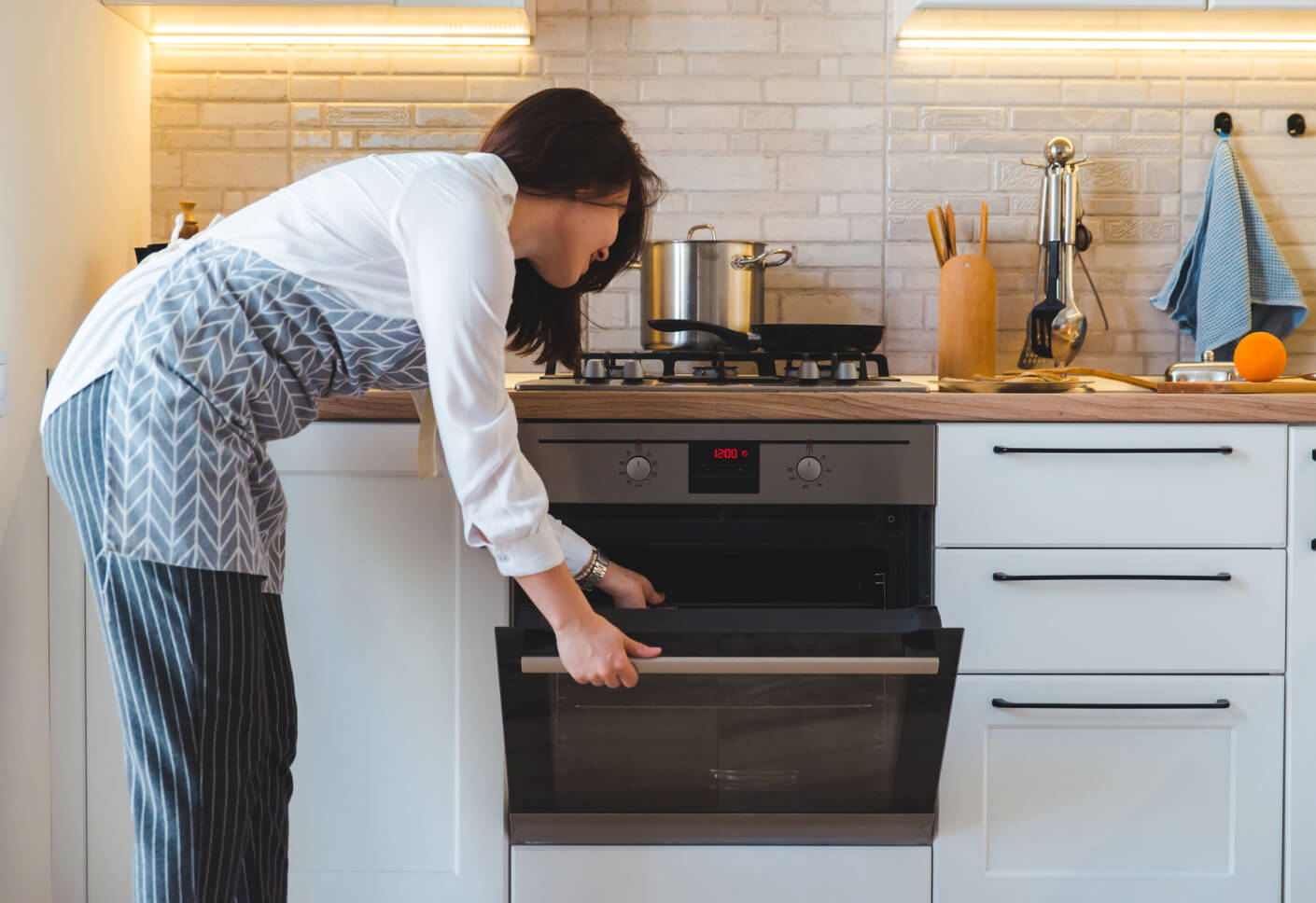
Many people search why is my gas oven making noise when they hear new or odd sounds. Match the noise to the likely cause below.
Repeated clicking that does not stop
The igniter is trying to light but no flame holds. This can be a weak igniter, blocked burner ports, or low gas flow. If it keeps clicking after 60 seconds, turn it off and let it cool.
Boom or bang at startup
This is often delayed ignition. Gas pools, then lights at once. It can shake the oven and scare you. Do not keep testing. Turn it off and call a pro, as this can be risky.
Whooshing or roaring flame
Air and gas mix is off, or the flame is too high. A dirty or mis-seated burner shield can do this. Blocked air vents can do it too.
Humming or buzzing
A soft hum can be the transformer or fan. A harsh buzz near the gas valve can mean a sticking solenoid. That needs service.
Squealing or grinding
The convection fan or cooling fan bearings can wear out. Debris on the fan blade can also scrape and squeal. If the sound rises with fan speed, the fan is the clue.
Rattling or vibrating
Loose racks, trays, or a warped drip pan can rattle. Loose side panels or a missing screw can buzz. A unit that is not level will shake and hum.
Ticking during heat-up or cool-down
This is often normal metal expansion and contraction. It should be light and brief. Loud or sharp ticks plus other symptoms can suggest loose shields or screws.
If you still wonder why is my gas oven making noise after this list, note the timing. Is it at startup, while heating, when the fan runs, or while cooling? Timing helps you and a technician find the root cause.

Quick safety checks you can do now
Before you panic about why is my gas oven making noise, do a few safe checks. Do these with the oven cool unless noted.
- Smell check. If you smell gas, do not light anything. Turn off the oven, open windows, leave the area, and call your gas utility or a pro.
- Flame color. When the oven is on, flames should be steady and mostly blue. Lazy yellow flames can signal dirt, poor air mix, or low pressure.
- Racks and pans. Make sure racks sit flat in the grooves. Remove extra trays or warped sheets that can buzz.
- Leveling. Place a small level on the rack. Adjust the front feet so the oven is steady. A lean can cause rattle.
- Fan isolate. If your model has convection, toggle convection on and off. If the noise starts with convection, the fan is suspect.
- Door and gasket. Check that the door closes snug. A torn gasket can whistle and leak heat.
These steps can narrow why is my gas oven making noise without tools. If anything seems unsafe, stop and call a technician.
Fixes you can try at home
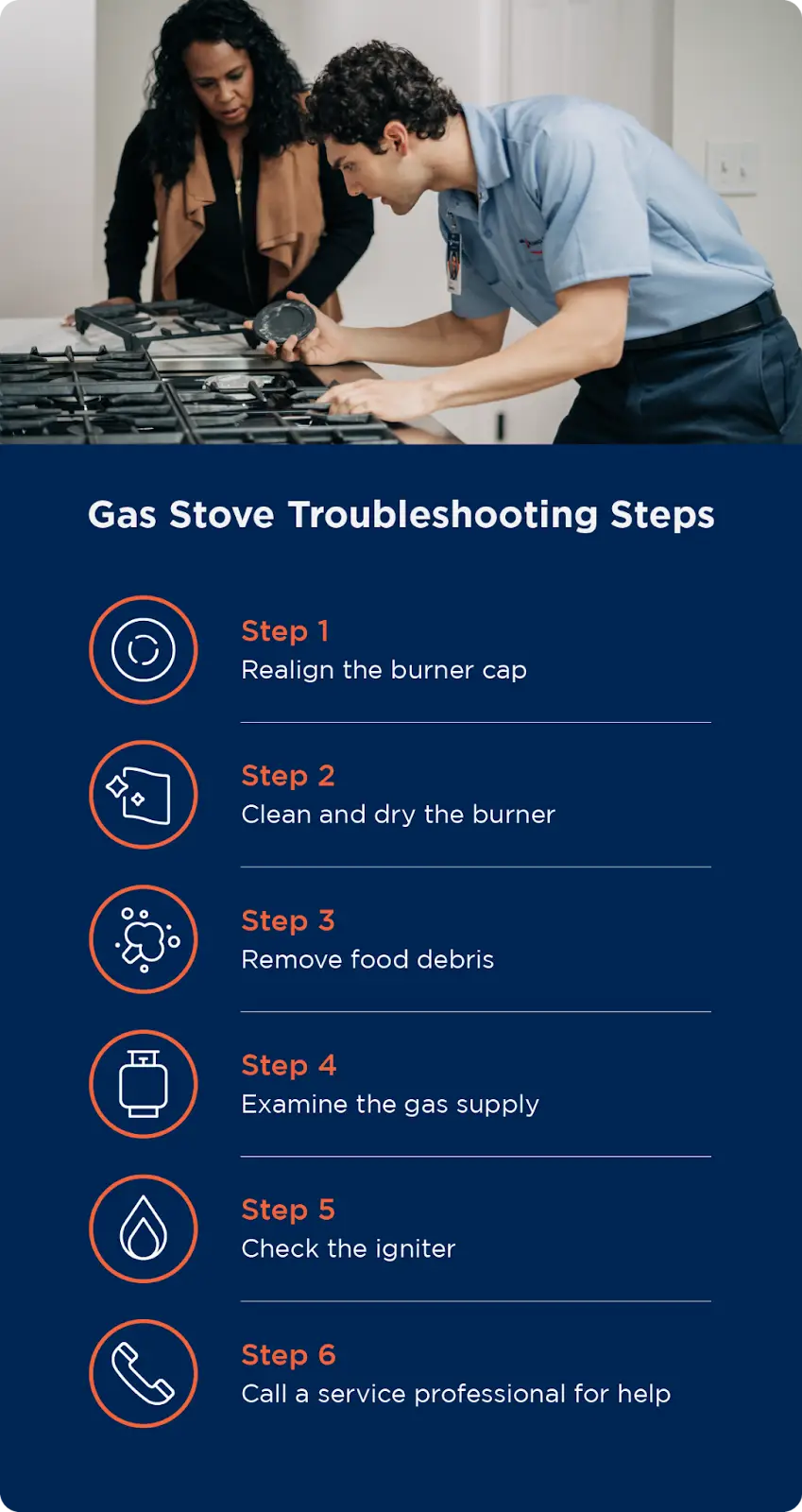
Here are simple fixes for why is my gas oven making noise that are safe at home. Always turn the oven off and let it cool first. Unplug it if you will touch panels or fans.
- Reseat parts. Push racks fully into place. Remove loose trays. Check the burner shield or flame spreader if your manual allows access, and reseat it.
- Clean light debris. Use a soft brush or a vacuum with a brush tip to clear loose crumbs around the burner shield and fan cover. Do not poke burner ports with hard tools.
- Tighten easy hardware. Gently snug visible screws on side panels, oven door handle, and fan cover. Do not open gas lines or sealed compartments.
- Reduce vibration. Level the feet. Add a small silicone pad between a rattling pan and rack. Do not block vents.
- Door gasket. If air whistles by the door, inspect the gasket. Replace if brittle, cracked, or torn.
If these do not solve why is my gas oven making noise, stop and call a pro. Do not adjust the gas regulator or valve yourself. That work needs training and tools.
A quick story from the field: a client had a soft boom on each start. The cause was food splatter clogging a line of burner ports. A careful cleaning and a new igniter fixed it. The oven ran quiet after.
When to call a pro
There are times when why is my gas oven making noise points to a hazard. Call a licensed technician if you notice any of the below.
- Gas smell at any time.
- Loud bang or boom during startup.
- Flames that lift off, flutter, or turn yellow or orange.
- Igniter clicks for more than a minute or fails often.
- Buzzing from the gas valve, or the pressure regulator chattering.
- Soot on cookware or inside the oven cavity.
These signs can relate to combustion, gas flow, or electrical faults. A pro can test pressure, leak check, and measure ignition current.
Preventive care and maintenance tips
You can prevent why is my gas oven making noise with light care. It does not take long.
- Wipe spills weekly. Grease and crumbs near the burner shield can affect ignition and airflow.
- Keep vents clear. Do not cover oven vents with foil or large pans.
- Gentle clean of fan area. Vacuum dust on fan covers with a brush tip. Avoid spraying cleaners into motors.
- Annual service. A tech can check igniter draw, clean burner ports, and lube fan bearings if the design allows.
- Replace wear parts on time. Igniters often last 3 to 7 years. Fans last longer but may need bearings or a new motor.
Small habits lower heat stress and cut noise at the source.
Repair costs and timelines
Curious what fixing why is my gas oven making noise might cost? Actual prices vary by brand and region, but these ranges are typical.
- Igniter replacement. Parts and labor often run $100 to $300. About 30 to 60 minutes.
- Convection or cooling fan motor. $150 to $400. About 45 to 90 minutes.
- Gas valve or regulator. $150 to $350 each. About 45 to 90 minutes with testing.
- Minor tighten and leveling. Often under $100, sometimes included in a service call.
- Diagnostic visit. $75 to $150, often applied to the repair.
Ask for a written estimate. Choose OEM or high-quality parts for best results.
Frequently Asked Questions of why is my gas oven making noise
Is it normal for a gas oven to click?
A few clicks during ignition are normal. Constant clicking means the flame did not prove or the igniter is weak, and you should stop and have it checked.
Why does my gas oven make a boom when it lights?
That boom is often delayed ignition from pooled gas lighting at once. Turn it off and call a pro, as this can be unsafe.
Can fan noise mean a failing part?
Yes. A squeal or grind that tracks with fan speed points to worn bearings or a bent blade. A new motor or blade usually fixes it.
Why is my gas oven making noise even after cleaning?
If cleaning did not help, the igniter may be weak, or a shield may be misaligned. A tech can test igniter current and reseat parts.
How do I stop rattling in my oven?
Remove extra trays, seat racks fully, and level the feet. If panels are loose, a technician can secure them and check for fan vibration.
Conclusion
Strange sounds do not have to be scary. Now you know why is my gas oven making noise, how to spot the pattern, and which steps are safe to try. You also know when to bring in a pro to keep your home safe.
Take ten minutes today to level the oven, reseat racks, and clear vents. If the sound is sharp, new, or paired with odd flames or gas smell, schedule service. Want more practical home tips? Subscribe for weekly guides, or drop a comment with the sound your oven makes and I’ll help you decode it.