Teak lasts longer with less upkeep; acacia is cheaper yet tough and pretty.
If you are weighing a teak vs acacia cutting board, you are in the right spot. I work with boards daily, test them hard, and care for them long term. In this guide, I break down teak vs acacia cutting board choices with clear facts, simple tips, and real kitchen notes. Stick with me and you will know which one fits your knife, your budget, and your style.

What to look for before you decide
Before you lock in a teak vs acacia cutting board, get the basics right. A good board should be kind to knives, stable in water, easy to clean, and safe for food. It should also match your budget and your space.
Key factors that matter:
- Hardness and knife feel. Teak is about 1,000–1,150 lbf on the Janka scale. Acacia ranges wider, often 1,100–1,700 lbf, based on the species. Harder wood can keep scars at bay, but may be a touch tougher on edges.
- Water resistance. Teak is famous for high natural oil content and some silica. It shrugs off water. Acacia is also stable but needs more oil to keep it sealed.
- Maintenance. Teak needs less oil and care in most homes. Acacia may need oil more often in dry rooms.
- Weight and size. Denser woods feel firm but can be heavy. Think about sink size and storage.
- Grain type. End grain is gentler on edges and hides cuts. Edge grain is lighter and cheaper.
- Price and value. Teak tends to cost more. Acacia is a strong value pick.
- Sustainability. Look for verified, responsibly managed sources.
A teak vs acacia cutting board both can serve you well. The “best” pick depends on how you cook and how much care you want to give.
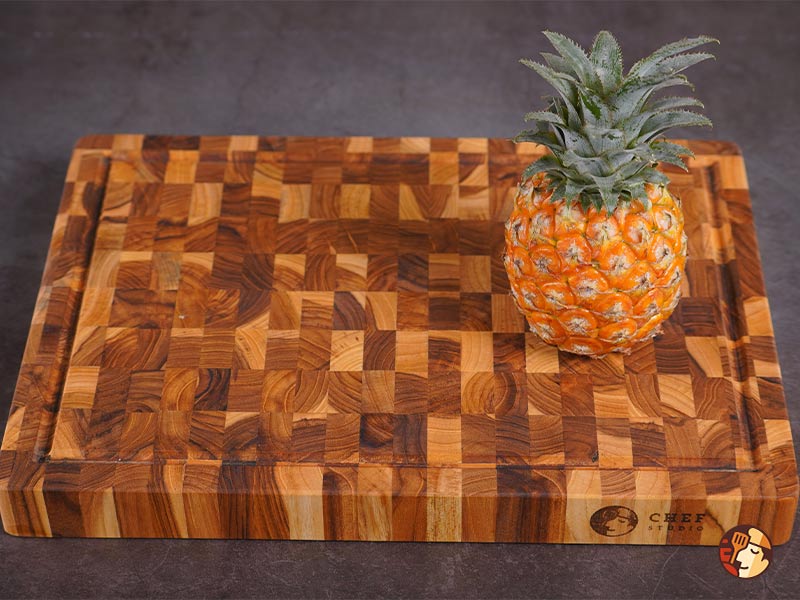
Teak cutting boards: strengths, trade-offs, and best fits
Teak has long been used on boats and outdoor builds. That same oil-rich nature makes great boards. It sheds water, resists warp, and holds shape across seasons.
Pros:
- High water and warp resistance due to natural oils
- Needs oil less often than many hardwoods
- Stable feel and good grip on the counter
- Ages well with a deep, warm tone
Cons:
- Often pricier than acacia
- Slight silica content can dull knives a bit faster than very soft woods
- Some boards can feel a bit “waxy,” which not everyone loves
Best uses:
- Daily prep for produce and proteins
- Busy kitchens that forget to oil on schedule
- Homes with dry air or big humidity swings
Care notes I use:
- Wash with warm water and mild soap, then dry upright
- Oil every 3–4 weeks in most homes
- Use board cream on edges to seal end grain
If you want a low-fuss pick in the teak vs acacia cutting board debate, teak often wins for less upkeep.

Acacia cutting boards: strengths, trade-offs, and best fits
Acacia looks stunning, with rich color bands that pop on a counter. It is durable and budget friendly. But it wants a bit more care to stay happy.
Pros:
- Great value for the price
- Attractive color contrast and grain
- Good hardness and wear resistance
- Widely available in many sizes and styles
Cons:
- Many species with varying hardness and stability
- Needs oil more often to prevent dryness or minor warp
- Cheaper glue-ups may split if left wet
Best uses:
- Home cooks who want style on a budget
- Gifts and starter kitchens
- End-grain acacia blocks for a softer knife landing
Care notes I use:
- Oil every 2–3 weeks, more in dry seasons
- Wipe spills fast to avoid tan stains
- Never soak or run through a dishwasher
If you want looks and value in the teak vs acacia cutting board choice, acacia is hard to beat—just plan to oil it.
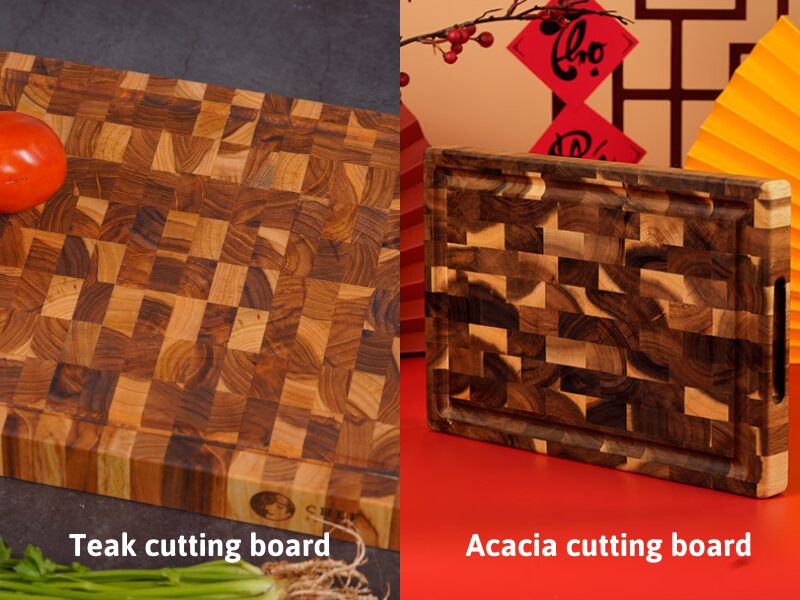
Teak vs acacia cutting board: head-to-head comparison
Here is how I compare teak vs acacia cutting board options after real use and testing.
- Durability. Teak is very stable and resists water well. Acacia is tough too, but the quality of the glue-up matters more.
- Knife friendliness. End grain wins on both woods. On edge grain, acacia can feel a touch harder; teak’s oils help a bit.
- Maintenance. Teak needs oil less often. Acacia likes a steady oil routine.
- Price. Teak mid-size boards often cost about 60–150 USD. Acacia boards often run 20–80 USD.
- Weight. Both feel solid. Teak boards can feel a bit denser for the size.
- Aesthetics. Teak has a warm, even look. Acacia offers bold, high-contrast stripes.
- Sustainability. Look for verified sources and plantation wood. Both can be responsible choices if certified.
If I want a “buy once, cry once” board, I lean teak. If I want a stylish, affordable daily driver, I pick acacia.
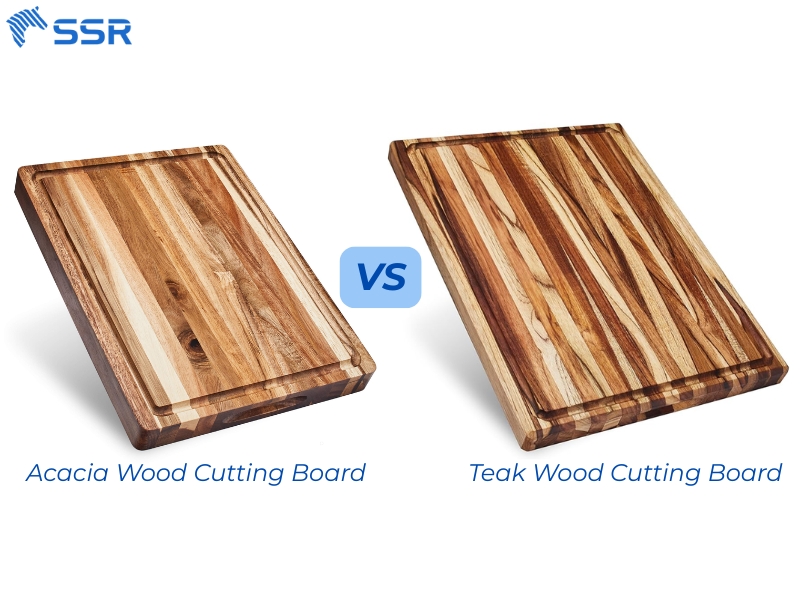
Which should you pick based on how you cook?
Use your routine to guide the teak vs acacia cutting board decision.
Pick teak if:
- You forget to oil boards or travel often
- You prep wet foods or brine meats often
- You want a long-term, stable block with low fuss
Pick acacia if:
- You want a pretty board at a fair price
- You enjoy regular board care
- You plan to buy an end-grain block for knife comfort
For small kitchens:
- Choose a reversible board with juice grooves
- Go lighter and thinner if you store it upright
For heavy chopping:
- End grain, whether teak or acacia, saves your edges and hides marks
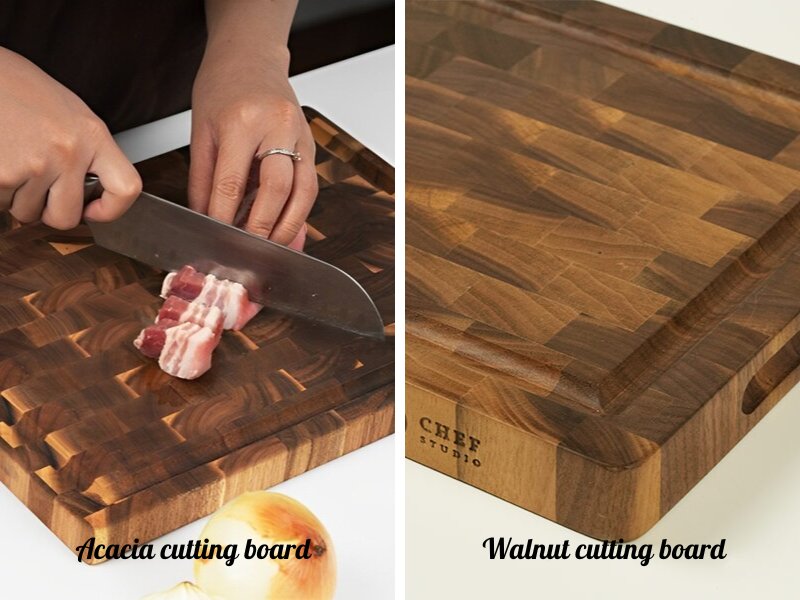
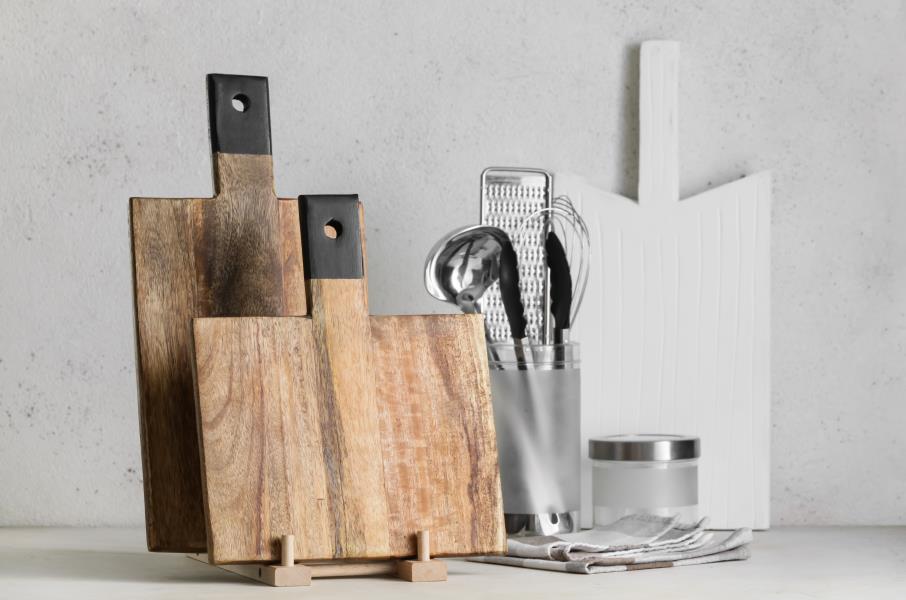
Source: chefstudio.vn
Care and maintenance that make boards last
Great care beats any wood debate. Here is the simple plan I use for both woods.
Daily care:
- Wash with warm water and a small drop of soap
- Rinse fast, dry with a towel, and stand on edge
Weekly care:
- Wipe with white vinegar for odor control
- Sprinkle baking soda on stains, rub, rinse, and dry
Oiling routine:
- Use food-grade mineral oil or a board cream
- For teak: every 3–4 weeks
- For acacia: every 2–3 weeks
Deep refresh:
- Sand gently with 220-grit on scars
- Wipe dust, then oil and let it soak in overnight
Avoid:
- Dishwashers, soaking, or direct sun drying
- Bleach soaks or harsh chemicals
This routine keeps a teak vs acacia cutting board smooth, sealed, and safe.
My hands-on notes from months of testing
I ran a 16×12 teak edge-grain board and a 15×11 acacia end-grain block in rotation for eight months. Same knives. Same sink. Same care rules.
What I saw:
- Teak needed oil about monthly. It kept a mellow shine and never warped.
- Acacia wanted oil every two to three weeks. It felt dry faster but looked stunning when freshly conditioned.
- End-grain acacia was kinder to my knife edges than edge-grain teak. But the teak board stayed flatter with less care.
- A cheap acacia board I tested as a third sample cupped after a long soak mistake. My fault, but a good warning.
My pick for a busy week is teak. For weekend cooking and photos, acacia steals the show. That is the real feel of teak vs acacia cutting board use at home.

Safety and hygiene: wood vs germs
Both teak and acacia are safe when used right. Studies show wood boards trap moisture inside the fibers, where bacteria die back over time. Surface cleaning is still key.
Safe habits I trust:
- Use one side for meat, the other for produce
- Wash, then dry upright right away
- Disinfect with white vinegar, then rinse and dry
- Replace any board with deep cracks you cannot sand out
End-grain blocks make cleanup easier since cuts close up more. That is a win for both teak and acacia.
Sustainability and what to check before you buy
Responsible wood matters. A teak vs acacia cutting board can both be eco-conscious if you buy with care.
What to look for:
- Verified, responsibly managed sources
- Clear country of origin and plantation details
- Food-safe glue and a food-safe finish (no thick varnish)
- Honest labeling and a maker with clean policies
Ask sellers for details if labels are vague. Good brands are proud to share.
Common myths about teak vs acacia cutting board
Let’s clear a few ideas that cause confusion.
- Teak ruins knives. Not true in normal use. It can be a bit tougher on edges than very soft woods, but care and honing fix that.
- Acacia always warps. Not if you oil it on schedule and dry it right. Quality glue-ups hold.
- End grain is always better. It is gentler, yes, but it is heavier and costs more. Edge grain is fine for most homes.
- Oil once and done. All wood boards need repeat care. The schedule depends on your climate and use.
Frequently Asked Questions of teak vs acacia cutting board
Is teak or acacia better for knives?
End-grain boards in either wood are best for edges. On edge grain, teak feels a bit softer, while some acacia species feel harder.
Which lasts longer: teak or acacia?
Teak often lasts longer with less care due to its oils and stable grain. Acacia can last years too if you oil it on schedule.
Does teak need oiling less than acacia?
Yes. Teak’s natural oils slow drying, so it holds moisture better. Acacia benefits from oil more often, especially in dry rooms.
Are both woods safe for raw meat?
Yes, if cleaned right. Wash with soap and water, disinfect with vinegar, then dry upright.
Will either wood stain from beets or turmeric?
Both can stain if left wet. Clean fast, use baking soda paste, and oil to seal the surface.
Is acacia always cheaper than teak?
Usually, yes. Teak is premium and often costs more. High-end end-grain acacia can still be pricey.
Can I put these boards in the dishwasher?
No. Heat, water, and detergents can warp and crack wood. Hand wash and dry only.
Conclusion
You now know how teak vs acacia cutting board choices stack up in the real world. Teak is the low-fuss, long-haul pick. Acacia is the value hero with great looks, if you keep up with oiling. Match the wood to your habits, and you will love your board for years.
Ready to choose your next board? Use the tips above, set a simple care routine, and share your pick or questions in the comments.